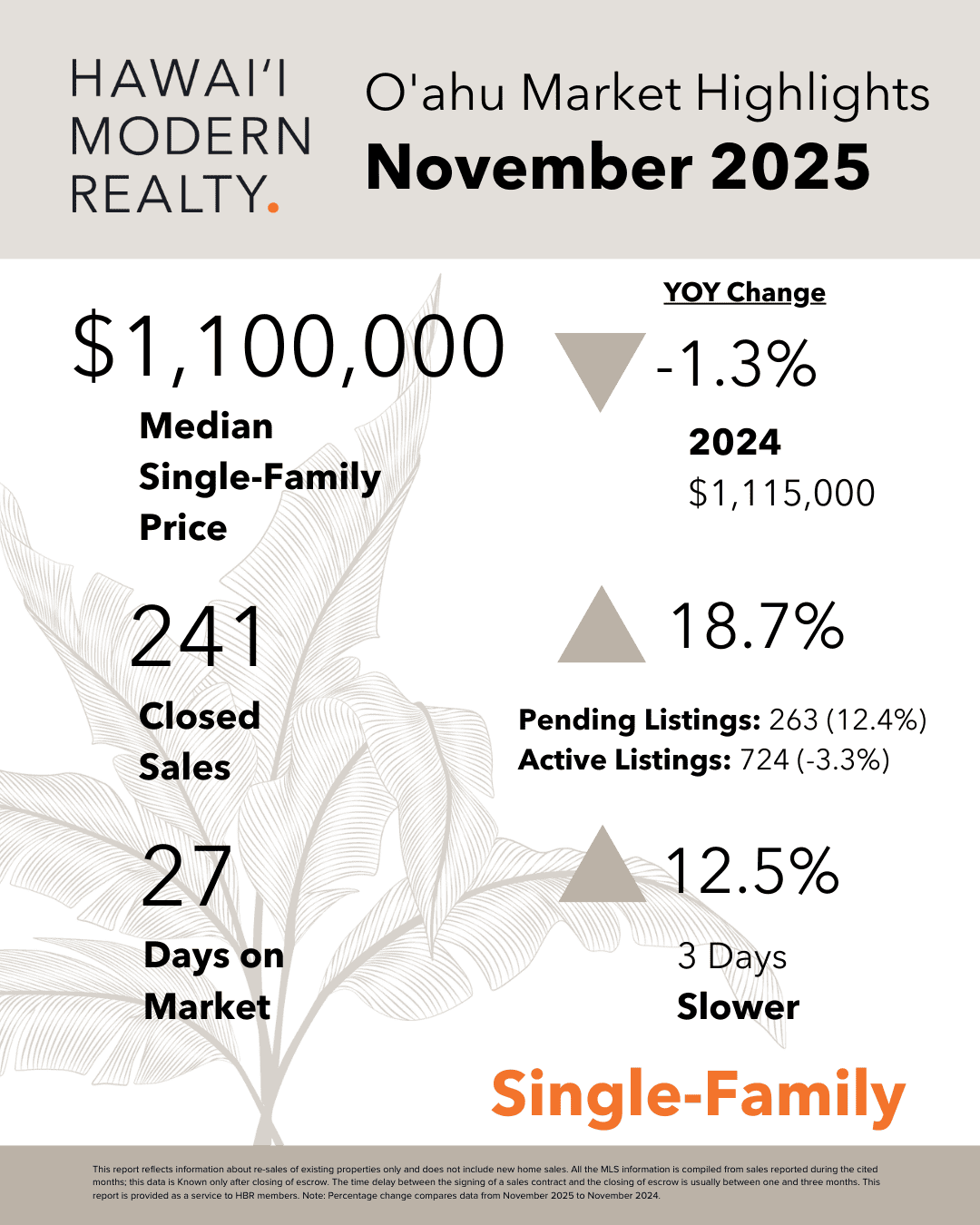
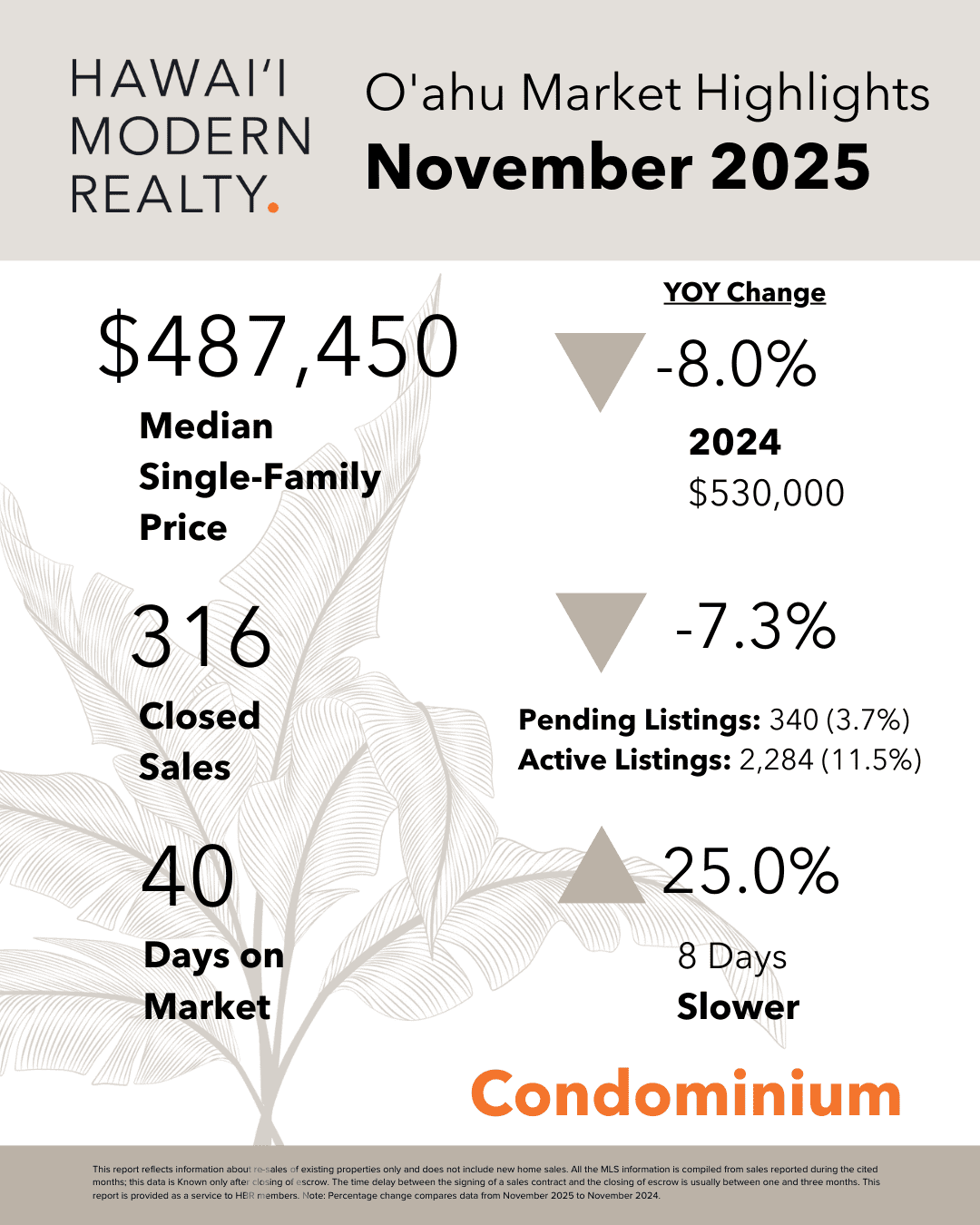
O'ahu's real estate market wrapped up November with a noticeable divide between single-family homes and condos - a pattern that has been building over recent months.
Single-family homes showed renewed strength, with sales rising nearly 19%. Even with that momentum, the median sales price dipped just slightly to $1.1 million - a sign that prices are holding firm despite slower overall market conditions. Meanwhile, the condo market moved in the opposite direction: sales fell 7%, and the median price dropped to $487,450 as more buyers targeted lower price points.
What's driving this separation? Buyer behavior is telling the story. Pending sales increased in both categories, but competition is nowhere close to equal. Nearly 27% of single-family homes sold above the asking price - compared to just 9% of condos. Rising maintenance fees and special assessments continue to weigh heavily on condo affordability, dulling enthusiasm in that segment.
Inventory conditions added more fuel to the split. Single-family home supply tightened slightly - especially in the $800,000 to $1.1 million sweet spot - keeping the market competitive and properties moving. Condos, on the other hand, saw inventory jump more than 11%, giving buyers more choices and less urgency.
Homes spent a median of 27 days on the market, while condos lingered for about 40 days. Both are slower than last year, but the contrast underscores how differently each segment is performing.
For sellers and buyers alike, November's message is straightforward:
Single-family home sellers hold the advantage with low supply and steady demand.
Single-family home buyers must move quickly and strategically - especially in popular price bands.
Condo buyers have more leverage and can take advantage of increased options.
Condo sellers need sharp pricing and strong presentation to stay competitive in a crowded field.
O'ahu's November market reinforces a timeless real estate truth:
Where demand outweighs supply, prices stay strong. Where inventory grows faster than buyers, negotiation power shifts.