The O'ahu housing market continues to demonstrate resilience as Hawai'i's economy gradually moves beyond the effects of the recent recession. While economic growth across the state is expected to remain measured, real estate across the island has remained notably steady.
Limited housing supply continues to support home values, even as elevated mortgage interest rates have slowed the overall pace of sales. Compared to the rapid acceleration experienced during the pandemic years, today's market reflects something more sustainable, steady demand, thoughtful buyers, and a pace that allows both buyers and sellers to move with greater clarity.
Single-Family Homes Continue to Lead the Market
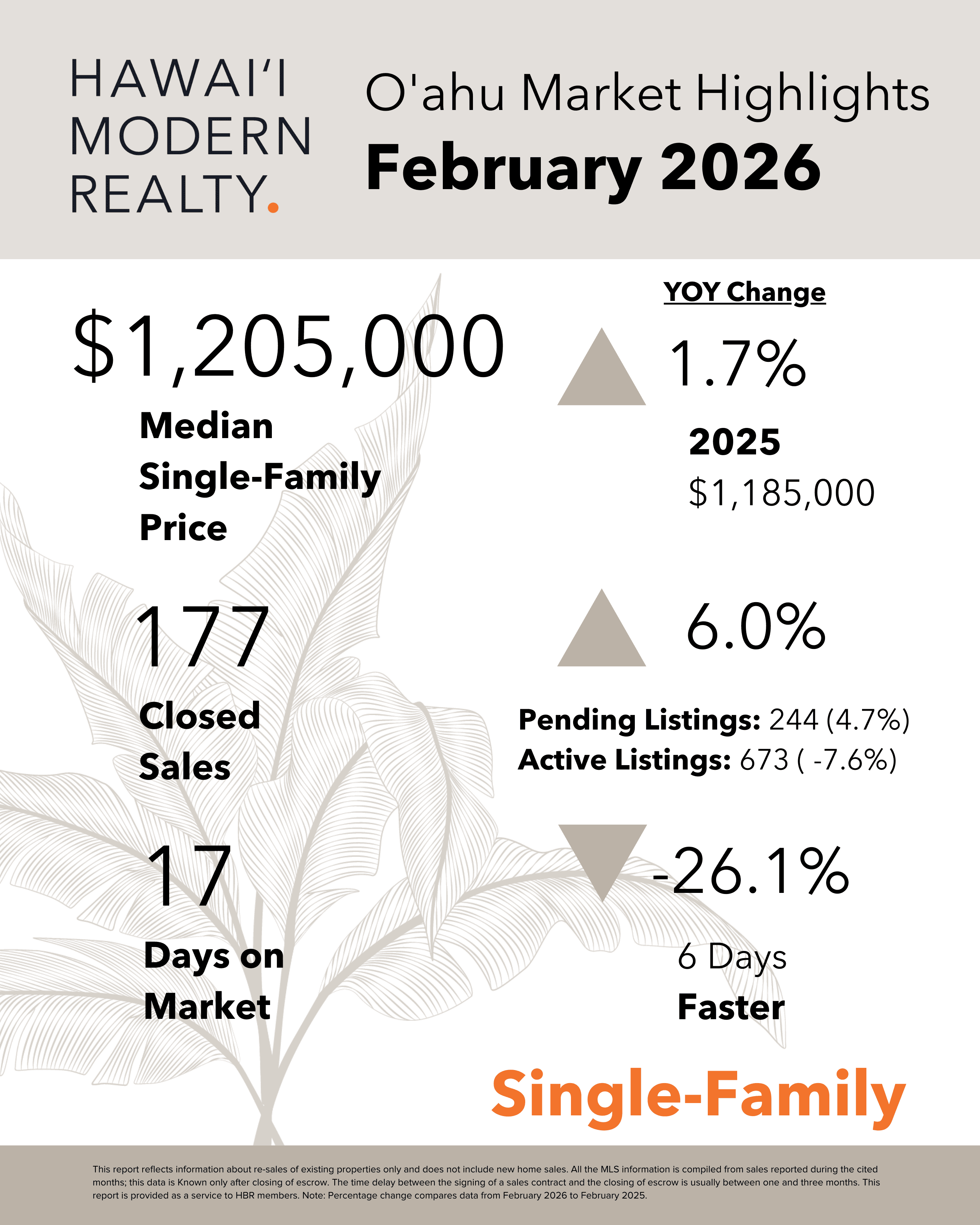
The single-family home market remains the strongest segment of O'ahu real estate. In February, 177 homes closed escrow, representing a 6% increase compared to the same time last year. At the same time, the median sales price reached $1,205,000, underscoring the continued strength of demand for detached homes across the island.
Homes are also moving quickly. The median time on market sits at just 17 days, and inventory remains extremely tight with only 2.8 months of supply available. In practical terms, this means well-positioned and well-priced homes continue to generate strong interest from buyers.
Across much of O'ahu, the single-family housing segment still favors sellers. Limited inventory combined with steady buyer demand keeps competition present for desirable properties, particularly in established neighborhoods and communities where new construction remains limited.
Condominiums Enter a More Balanced Phase
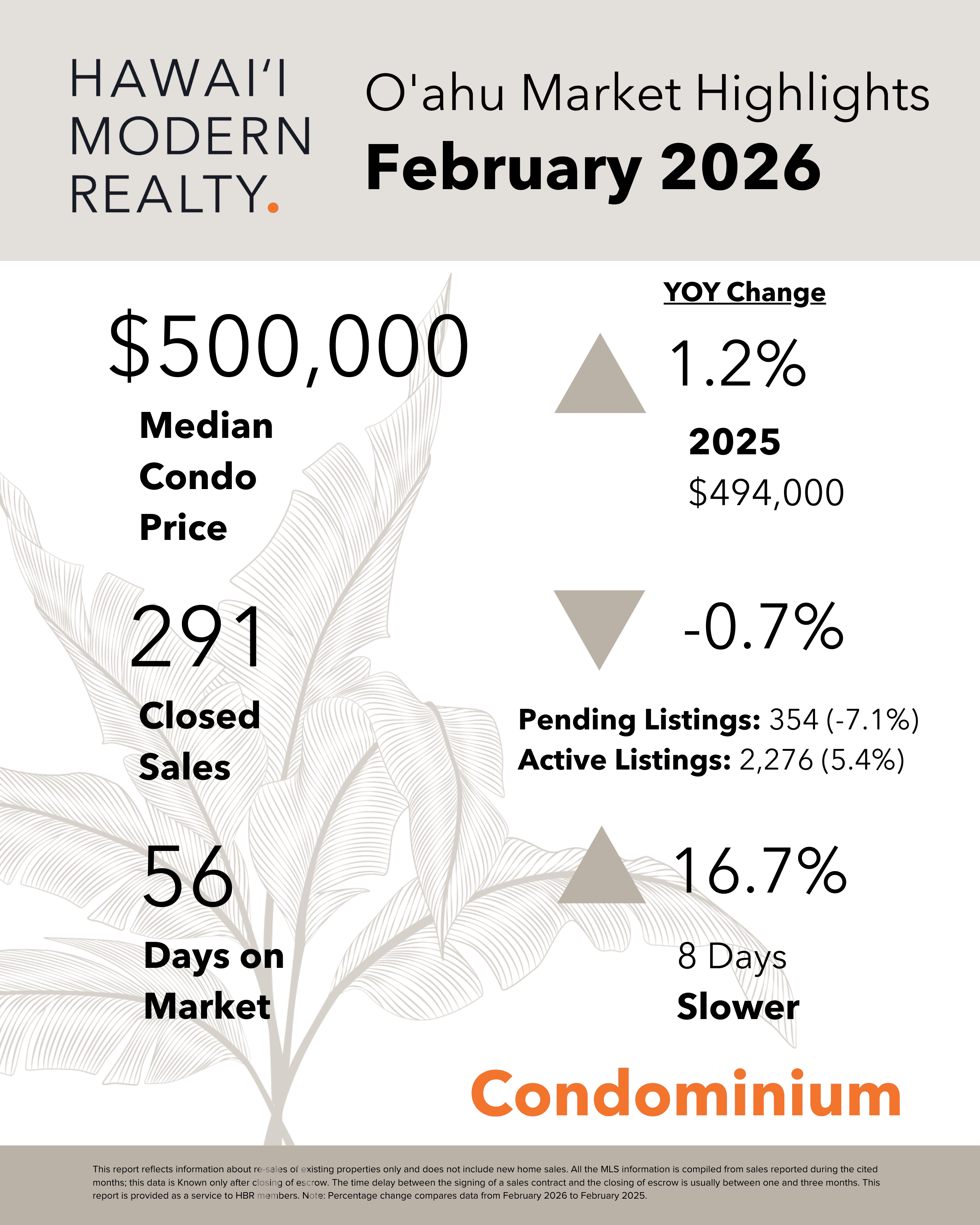
The condominium market presents a slightly different dynamic. Condo sales in February were largely flat year-over-year, with a median price of $500,000. However, the supply of available units has increased, and properties are taking longer to sell.
The typical condominium is now spending about 56 days on the market, and the segment currently carries approximately 6.2 months of inventory. This shift has created a more balanced environment where buyers have additional options and greater negotiating room compared to the single-family home market.
In effect, O'ahu currently operates within two distinct housing environments: a tighter, faster-moving market for single-family homes and a more patient, balanced market for condominiums.
What Will Shape the Market Going Forward
Several broader economic force will influence housing demand across Hawai'i in the months ahead. Mortgage interest rates remain the most immediate factor, as even modest shifts in borrowing costs can meaningfully affect buyer affordability.
Beyond interest rates, the health of Hawai'i's key industries, job growth, household income levels, and migration patterns to and from the islands will all play a role in shaping housing demand. The pace of new housing construction will also be closely watched, as the long-standing shortage of housing inventory remains one of the most significant structural factors supporting property values.
O'ahu's housing shortage has been decades in the making, and that limited supply continues to provide a strong foundation for long-term home values. If mortgage rates begin to ease and affordability improves, more buyers could re-enter the market, potentially accelerating housing activity once again.
For now, the market appears to be settling into a more sustainable rhythm, one defined less by rapid swings and more by steady demand, limited supply, and the enduring appeal of owning property in Hawai'i.