Table of Contents
- The Big Picture: How O‘ahu Compares
- Housing: The Largest Line Item
- Everyday Costs Beyond the Mortgage or Rent
- What Income Level Supports a Comfortable Move?
- Neighborhoods and Lifestyle Trade-offs
- Areas We Cover Across O‘ahu
- Why Working with Hawai‘i Modern Realty Feels Different
- Frequently Asked Questions
- Ready to turn these numbers into a real plan for your move to O‘ahu?
Moving from the mainland to O‘ahu is a dream for many. The beaches, the climate, and the sense of place draw people who want a different pace and a deeper connection to the outdoors. Yet the cost of living here is one of the highest in the United States, and the gap between expectation and reality can catch newcomers off guard.
This guide walks through the major expense categories with current figures so you can plan with clearer eyes. The goal is not to discourage anyone. It is to help mainland relocators set realistic budgets and make informed decisions about where and how they want to live on the island.
The Big Picture: How O‘ahu Compares
Hawaii’s overall cost-of-living index sits in the range of 180–185, where 100 represents the U.S. average. Honolulu and the rest of O‘ahu consistently rank among the most expensive places in the country. Housing drives most of the difference. Utilities and groceries also run higher than mainland norms because nearly everything arrives by ship or plane.
Independent sources such as the Council for Community and Economic Research (C2ER), MERIC, and regional price data from the Bureau of Economic Analysis all place Hawaii at or near the top of state rankings. The practical result is that a lifestyle that feels comfortable on the mainland often requires a higher household income once you arrive on O‘ahu.
Housing: The Largest Line Item
Housing is the single biggest factor. Median sale prices for single-family homes on O‘ahu have hovered in the $1.1 million to $1.2 million range in recent market reports, depending on the month and data source. Condominiums typically land lower, with median prices often reported between $500,000 and $530,000.
Renters face similar pressure. Average rents in Honolulu for all unit types are frequently cited around $3,200 per month. Two-bedroom units commonly range from the mid-$2,000s to $3,600 or more, depending on location, building age, and whether the unit is a condo or apartment complex. Desirable neighborhoods near the coast or with strong schools command premiums.
Property taxes on O‘ahu are relatively low compared with many mainland states, which offers some relief for owners. Still, the purchase price or monthly rent remains the dominant expense.
Everyday Costs Beyond the Mortgage or Rent
Groceries, utilities, and transportation add up quickly.
Groceries run roughly 30–50 percent above the national average. A gallon of milk often costs $6–$8, a dozen eggs $6–$9, and a loaf of bread $5–$7. Local produce and farmers’ markets can help, but imported staples carry shipping costs that show up at the register. Families of four commonly report monthly grocery bills of $1,400–$2,200 when cooking most meals at home.
Utilities are another notable difference. Electricity rates on O‘ahu are among the highest in the nation, often three times the U.S. average because of the reliance on imported fuel. A typical residential bill without solar can easily reach $150–$300 or more, especially if air conditioning is used regularly. Many single-family homes install rooftop solar to bring this number down. Water, sewer, and trash are more moderate, and internet service is competitive.
Transportation requires planning. Gas prices on O‘ahu commonly sit between $4.80 and $5.65 per gallon. Vehicle registration, safety inspections, and insurance add further costs. Public transit via TheBus is available and relatively affordable, with monthly passes around $80, but most households still keep at least one car for flexibility across the island.
Here is a simplified monthly cost comparison for a household of two adults (excluding major debt payments or childcare):
| Category | Approximate O‘ahu Range | Mainland U.S. Average (rough) |
|---|---|---|
| Housing (rent, 2BR) | $2,500–$3,600 | $1,500–$2,000 |
| Utilities | $250–$450 | $150–$250 |
| Groceries | $900–$1,400 | $600–$900 |
| Transportation | $300–$500 | $200–$350 |
| Total (excluding housing debt) | $4,000–$6,000+ | $2,500–$3,500 |
These are illustrative ranges drawn from recent cost-of-living reports and local market data. Actual numbers vary by neighborhood, lifestyle, and household size. A single person living modestly can manage on less. A family with children or a preference for dining out will spend more.
What Income Level Supports a Comfortable Move?
Many relocators find that a combined household income of $120,000–$180,000 or higher provides more breathing room for a family, depending on housing choices and debt. Single professionals often target $70,000–$100,000+ for a comfortable but not extravagant lifestyle, particularly if they share housing or choose a more affordable area. Remote workers and military families sometimes bridge the gap through housing allowances or mainland-level salaries.
The key is matching expectations to actual numbers rather than relying on mainland benchmarks.
Neighborhoods and Lifestyle Trade-offs
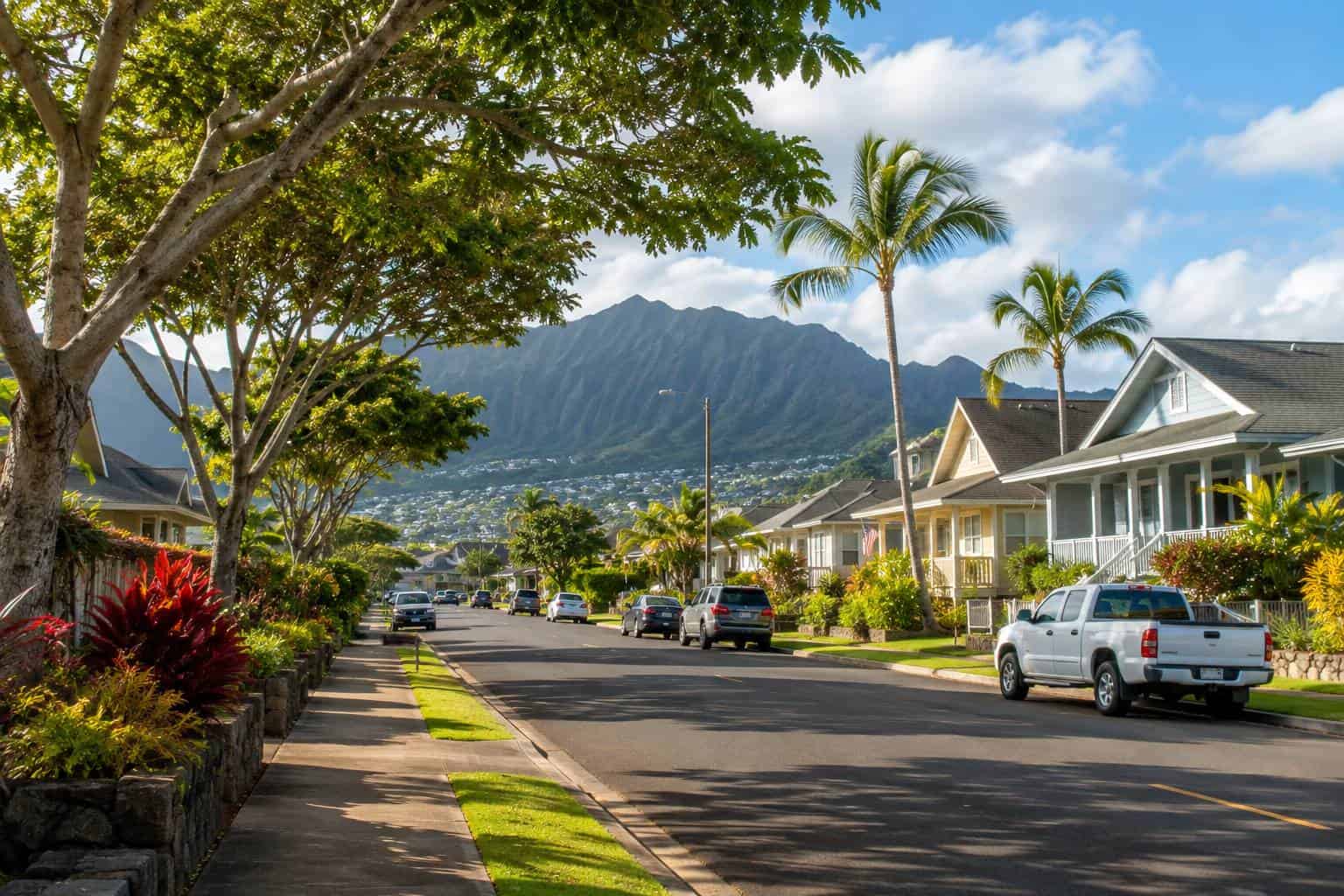
O‘ahu offers a wide range of communities. Windward towns such as Kailua and Kāne‘ohe deliver beach access and a slower feel but higher prices. Central areas like Mililani and the growing Kapolei–‘Ewa corridor often provide more space and relatively lower housing costs. Honolulu neighborhoods from Kaka‘ako to Mānoa and Kaimukī mix urban convenience with varied price points. The North Shore and Hawai‘i Kai attract those seeking a stronger outdoor or residential character.
Choosing the right area involves balancing commute times, school preferences, flood or wildfire risk in certain zones, and long-term maintenance costs for older homes or condo associations.
Areas We Cover Across O‘ahu
Hawai‘i Modern Realty advisors work throughout the island, including:
- Kailua
- Hawai‘i Kai
- Kahala and Diamond Head
- Kaka‘ako
- Kapolei
- ‘Ewa Beach
- Kāne‘ohe
- North Shore
- Mānoa
- Waikīkī
- Mililani
- Kaimukī
- and many additional communities from the leeward coast to the windward side
Our agents live and work in these neighborhoods and understand the local nuances that affect both daily life and long-term value.
Why Working with Hawai‘i Modern Realty Feels Different
Relocating is more than a transaction. It is a life change that benefits from local knowledge, modern tools, and steady guidance. Hawai‘i Modern Realty is an independent, locally owned brokerage with deep roots on the islands. Our advisors bring firsthand understanding of O‘ahu’s neighborhoods, market conditions, and the practical realities of island living.
We use modern technology, including advanced search tools, to help clients efficiently find properties that match their criteria. Through our membership in Leading Real Estate Companies of the World (LeadingRE), we also connect clients to a global network of trusted professionals when needed. The combination of local expertise, personalized service, and broader reach allows us to support mainland relocators from the first conversation through closing and beyond.
Frequently Asked Questions
Is O‘ahu really that much more expensive than the mainland?
Yes. The overall cost-of-living index is roughly 80–85 percent higher than the national average, with housing the primary driver. Groceries and electricity also cost more.
How much should I budget for rent or a mortgage?
Two-bedroom rentals commonly fall between $2,500 and $3,600 per month in many parts of Honolulu, with variation by location. Buyers should plan around current median prices near $1.1–$1.2 million for single-family homes and roughly $500,000–$530,000 for many condominiums.
Do I need a car on O‘ahu?
Most households find a car necessary for convenience, though TheBus covers large portions of the island and is useful for some routes. Parking and insurance add to ownership costs.
Are there ways to lower everyday expenses?
Shopping at warehouse stores, cooking at home, choosing solar when possible, and selecting a neighborhood that matches your budget all help. Local knowledge of less-toured areas can also make a difference.
Should I buy or rent first?
Many relocators rent for six to twelve months to experience different parts of the island before purchasing. This approach reduces the risk of choosing a location that does not fit long-term.
Ready to turn these numbers into a real plan for your move to O‘ahu?
Connect with a Hawai‘i Modern Realty advisor who lives and works on the island. We will walk through your budget, preferred neighborhoods, and timeline with clear local insight, modern search tools, and the support of our LeadingRE global network.
Whether you are just starting to explore or already comparing homes, one conversation can help you avoid costly surprises and find the right fit faster.
Reach out today or call our Honolulu office. Your O‘ahu chapter starts with the right guidance.