
Table of Contents
- Why This Decision Matters More on O‘ahu
- Path 1: Sell First
- Path 2: Buy First
- Hybrid and Alternative Approaches
- A Practical Decision Framework
- Market Realities That Shape Timing on O‘ahu
- Common Pitfalls to Avoid
- Why Working with Hawai‘i Modern Realty Makes a Difference
- Areas We Serve and Property Expertise
- Frequently Asked Questions
- Next Steps
Moving on O‘ahu is rarely simple. Limited inventory, strong demand for well-priced single-family homes, and the practical realities of island living all shape the decision of whether to buy your next home before selling your current one, or the other way around. There is no single answer that fits every household. The right path depends on your finances, risk tolerance, timeline, and the specific property type and neighborhood involved.
This guide walks through the real trade-offs so you can make a grounded choice. It also shows how local market knowledge and careful planning reduce stress and protect your equity.
Why This Decision Matters More on O‘ahu
O‘ahu’s housing market remains supply-constrained for single-family homes. Recent data shows median sale prices near historic levels, often in the $1.16 million to $1.2 million range, with many well-priced homes selling in two to three weeks. Condos generally offer more inventory and negotiating room. These conditions influence strategy. In a market where desirable homes move quickly, contingent offers (those that depend on the sale of your current home) face higher rejection rates. At the same time, carrying two properties can strain cash flow if your current home takes longer than expected to sell.
Local factors add layers: military PCS cycles create seasonal demand spikes, insurance and HOA costs affect monthly budgets, and the logistics of temporary housing on an island require advance planning. Understanding these realities helps you choose the sequence that fits your situation rather than following mainland advice that may not apply.
Path 1: Sell First
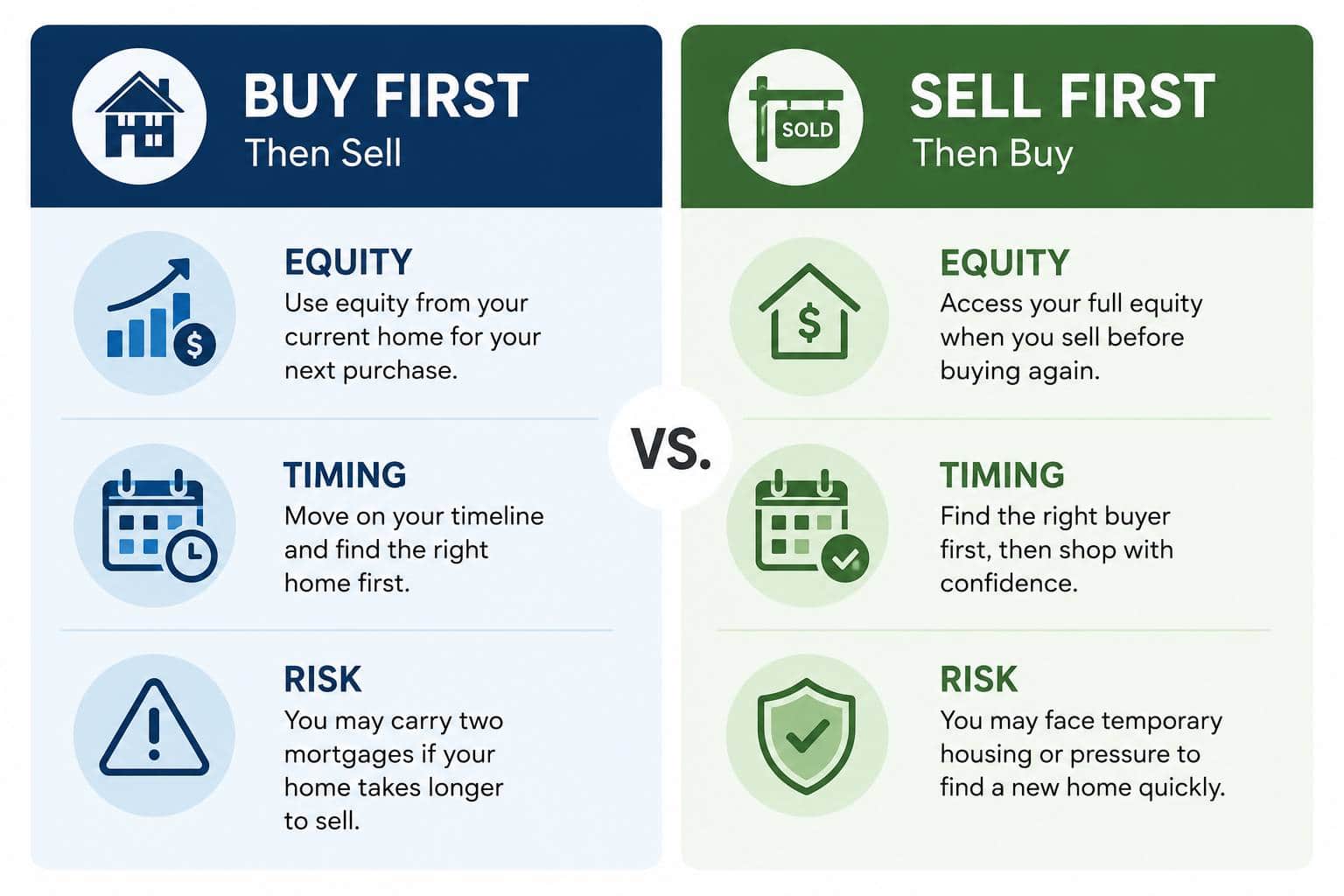
You list and close on your current home, then search for and purchase the next one. Many households use a rent-back agreement with the buyer or arrange short-term housing during the gap between closing and moving into the new home.
Advantages of Selling First
You gain certainty about your equity and exact purchasing power. Once the sale closes, you know precisely how much cash you have available for the next down payment and closing costs. Your offer on the next home is stronger because it is not contingent on another sale. Sellers and listing agents view non-contingent offers more favorably, especially when multiple offers appear on desirable single-family homes.
You avoid the risk of carrying two mortgages, two sets of insurance premiums, and two property tax bills at the same time. Pricing and timing decisions on your current home stay more deliberate. You are not forced to accept a lower offer simply because you already own another property and need the equity quickly.
Challenges of Selling First
You may need temporary housing and storage. Even with a rent-back arrangement, the buyer may limit the length of time you can stay after closing. Searching for a new home after you have already sold can feel compressed if the right property does not appear within a few weeks. In competitive single-family segments, waiting too long after selling can mean missing opportunities or feeling pressure to compromise on location, condition, or price.
This path often suits households that need sale proceeds for the next down payment, prefer lower financial risk, or are selling a property that may take longer to move. Condos in certain price bands, homes that need updates, or properties in softer micro-markets can fall into this category.
Practical Tips for a Smooth Sell-First Process
Price the home accurately from the first day on the market. Overpricing often leads to longer days on market and eventual reductions that signal weakness to buyers. Prepare the property thoroughly so it shows well and generates strong early interest. Discuss rent-back options with your agent before accepting an offer so the terms are clear. Line up temporary housing or family options early rather than waiting until escrow is underway. Work with a lender in advance so you understand your true buying power once the sale proceeds are in hand.
Path 2: Buy First
You secure and close on the new home while still owning the current one, then sell. This approach requires the financial capacity to qualify for and carry two properties for a period of time.
Advantages of Buying First
You move only once in most cases. You can take time to find the right property without the pressure of a pending sale hanging over the search. You know the exact cost of the new home before finalizing the sale of the old one, which helps with budgeting and planning improvements. In tight single-family segments, a non-contingent offer carries more weight and can help you win a home that receives multiple offers.
Challenges of Buying First
You must qualify for and carry two housing payments for weeks or months. If the current home sells slower than projected, cash reserves can deplete faster than expected. Bridge financing or other short-term solutions exist but add interest costs and underwriting complexity. Not every buyer qualifies for the necessary financing, especially if debt-to-income ratios are already elevated. The seller of your current home may also sense urgency if they know you have already purchased elsewhere, which can affect negotiating leverage.
This approach works best when you have strong equity in the current home, solid cash reserves, clear lender support for overlapping payments, and comfort with higher short-term risk. It is more common among households with significant liquid assets or those selling a property that is expected to move quickly once listed.
Practical Tips for a Smooth Buy-First Process
Obtain full underwriting approval, not just a pre-qualification, before writing offers. Confirm with your lender exactly how long you can carry two properties and what documentation will be required. Price your current home competitively the moment it goes on the market so it attracts serious buyers quickly. Consider a slightly more aggressive marketing plan and readiness for showings so the sale timeline stays as short as possible. Build a realistic buffer into your cash reserves for unexpected delays or repairs that surface during the sale process.
Hybrid and Alternative Approaches
Some households combine elements of both paths. A common hybrid involves listing the current home first while beginning a serious search, then writing a contingent offer only if a strong buyer has already been identified. Another option is a simultaneous close, where both transactions are timed to close on or near the same day. This requires careful coordination between two sets of agents, lenders, and escrow officers.
Bridge loans or home equity lines of credit can temporarily cover the gap between purchase and sale. These tools carry interest costs and must be paid off when the current home sells. Rent-back agreements after selling can give you extra time to complete the purchase without moving twice. Each of these options has specific costs and risks. A local advisor can model the numbers for your situation so the true expense is clear before you commit.
A Practical Decision Framework
Use these questions to clarify your best path. Answer them honestly with your actual numbers rather than optimistic assumptions.
- Do you need the equity from your current home to fund the next purchase or down payment? If yes, selling first is usually the safer route. Buying first without that equity often requires larger cash reserves or alternative financing that may not be available or affordable.
- Can you comfortably carry two full housing payments (mortgage or rent, insurance, taxes, HOA or AOAO fees, and utilities) for three to six months if needed? If the answer is no or uncertain, lean toward selling first. Dual costs add up quickly on O‘ahu.
- Is your current home likely to sell quickly at a strong price in today’s market? Well-prepared, accurately priced single-family homes in desirable neighborhoods often move in two to three weeks. Condos or properties that need updates may take longer. A realistic assessment of condition, pricing, and local demand is essential.
- How important is minimizing the number of moves and avoiding temporary housing? If moving twice or living in short-term housing feels highly disruptive for work, school, or family reasons, explore buy-first options carefully with your lender and agent.
- What is your true risk tolerance? Selling first generally reduces financial uncertainty. Buy first prioritizes convenience and control over the search process. Neither is inherently better; the fit depends on your household.
- Have you spoken with a local lender about both scenarios? Early lender conversations reveal whether overlapping ownership is even possible under current underwriting guidelines and what the true monthly cost would be.
A simple comparison helps organize the trade-offs:
| Factor | Sell First | Buy First |
|---|---|---|
| Equity certainty | High once closed | Lower until current home sells |
| Offer strength on next home | Strong (non-contingent) | Strong if non-contingent |
| Dual housing costs | Avoided | Possible for weeks or months |
| Number of moves | Often two (or one with rent-back) | Usually one |
| Temporary housing need | Possible | Rarely needed |
| Best for | Most households needing proceeds or lower risk | Households with reserves and lender support |
Market Realities That Shape Timing on O‘ahu
Single-family homes in many neighborhoods continue to favor prepared sellers when priced correctly. Accurate pricing from day one matters more than almost any other factor. Homes that sit often face subsequent reductions and weaker negotiating positions. Condos currently give buyers more room to negotiate in many price bands, which can ease both buy-first and sell-first paths depending on the specific building and location.
Seasonal patterns also play a role. Military relocation cycles and school calendars influence demand in spring and early summer. Pricing strategy and presentation remain more important than trying to time the market perfectly. Condition affects outcomes as well. Homes that feel turnkey tend to generate stronger early interest than those that require visible work.
Preparation strengthens either path. For sellers, this includes professional photography, clear and complete disclosures, and addressing obvious condition issues that buyers notice immediately. Staging or simple decluttering can improve perceived value. For buyers, full pre-approval and a clear understanding of total monthly costs, including insurance and HOA or AOAO fees, prevent surprises during escrow.
Common Pitfalls to Avoid
Underestimating the time needed to sell is one of the most frequent mistakes. Even in a relatively strong market, not every home sells in two weeks. Assuming a contingent offer will be accepted without a strong backup plan creates unnecessary risk. Overlooking the full cost of dual ownership, including insurance increases or HOA special assessments, can strain budgets. Waiting too long to line up temporary housing or storage leads to last-minute stress and higher costs. Finally, treating the decision as purely emotional rather than running the actual numbers often leads to regret later.
Why Working with Hawai‘i Modern Realty Makes a Difference
Hawai‘i Modern Realty combines deep local knowledge with modern tools, including AI-assisted search, to help clients navigate these decisions with clarity. Our advisors understand neighborhood nuances across O‘ahu and the practical realities of island moves. We focus on personalized strategy rather than one-size-fits-all advice. Whether you need a precise net-sheet projection, help coordinating a rent-back, modeling dual carrying costs, or guidance on making a competitive non-contingent offer, the approach is tailored to your goals and timeline. Local ownership and a focus on clear communication mean you work with people who live and understand these communities.
Areas We Serve and Property Expertise
- Honolulu and urban core neighborhoods
- Windward side communities including Kailua and surrounding areas
- Central O‘ahu and Mililani
- Kapolei and the ‘Ewa plain
- East Honolulu and Hawai‘i Kai
- North Shore and other lifestyle-focused areas
Our team regularly assists with single-family homes, condominiums, luxury properties, rentals, and open house coordination. We support both primary residences and second-home or investment goals with the same attention to detail.
Frequently Asked Questions
Is it better to buy first or sell first in a seller’s market on O‘ahu?
In tighter single-family segments, a non-contingent offer often performs better. The safer financial path for most people remains selling first unless reserves and financing clearly support overlapping ownership.
What if my home needs updates before it can sell well?
Condition affects days on market and final price. Address high-impact items or price accordingly. Some sellers use renovation strategies that defer costs until closing. Your advisor can help evaluate the numbers for your specific property.
Can I make a contingent offer on O‘ahu?
Yes, but acceptance rates are lower when inventory is limited and multiple offers appear. Strong earnest money, flexible timelines, and a well-priced current home improve the odds.
How long might I need temporary housing if I sell first?
It varies by situation. Some households use short rent-backs with the buyer. Others arrange month-to-month rentals or stay with family. Planning this early reduces stress and cost.
Does the decision change for condos versus single-family homes?
Often yes. Condos currently offer more inventory and negotiation flexibility in many segments, which can ease both paths. Single-family homes in desirable locations tend to move faster when priced correctly.
What role does financing play?
Lenders look at debt-to-income ratios carefully when two properties are involved. Early conversations with a local lender and your real estate advisor prevent late surprises and clarify whether a buy-first path is realistic.
Are there tax implications I should consider?
Capital gains rules, potential exclusions for primary residences, and the timing of sale versus purchase can affect the net result. Discuss these with a qualified tax professional alongside your real estate plan.
Next Steps
The most effective plan starts with clear numbers: current home value, equity position, monthly carrying costs under both scenarios, and your comfort with risk. From there, the sequence becomes much clearer.
If you are weighing a move on O‘ahu, reach out to a Hawai‘i Modern Realty advisor. We can review your specific situation, model the financial impact of each path, and help you move forward with confidence. Visit https://www.modernhawaii.com/ or contact a local advisor to begin the conversation.