Table of Contents
Buying a home on O‘ahu is a meaningful milestone. The process follows clear steps once an offer is accepted, yet the island’s escrow system, inspection practices, and recording requirements create a timeline that differs from many mainland markets. Most financed purchases close in 30 to 45 days. Cash transactions often finish sooner. Understanding each phase helps you stay prepared and move with confidence.
This guide walks through the complete timeline from accepted offer to receiving the keys. It answers the questions buyers ask most often and highlights how a local team can keep the process smooth.
Typical O‘ahu Escrow Timeline at a Glance
| Stage | Typical Timing | Key Actions |
|---|---|---|
| Offer Accepted & Escrow Opens | Day 0–1 | Contract signed, escrow opened |
| Earnest Money Deposit | Within 1–3 business days | Funds deposited into escrow |
| Inspection Period | Days 1–14 (often 7–14 days) | Home and termite inspections |
| Title Report & Disclosures | Days 7–14 | Preliminary title, seller disclosures, condo docs if applicable |
| Appraisal & Financing | Days 7–30+ | Lender appraisal, underwriting |
| Contingency Removal | By contract deadlines | Inspection, financing, appraisal |
| Final Walk-Through & Signing | 3–7 days before recording | Property check, document signing |
| Recording & Keys | Closing day (30–45 days total) | Deed recorded, funds disbursed, keys released |
Timelines are approximate and depend on the contract, financing type, property condition, and complexity of title. Cash deals frequently close in 15–21 days when title is clear.
Step 1: Offer Acceptance and Opening Escrow
Once the seller accepts your offer, both parties sign the Hawai‘i Association of REALTORS purchase contract. Escrow opens with a neutral third-party escrow company the same day or within one to two days. Hawai‘i is an escrow state, so the escrow officer coordinates funds, documents, and deadlines for everyone involved.
You deposit earnest money, typically 1 to 3 percent of the purchase price, into escrow within the time stated in the contract (usually one to three business days). This deposit shows good faith and is held until closing or until the contract allows its return.
Your lender receives the accepted contract and begins the formal loan process if you are financing.
Step 2: Inspections and Due Diligence
The inspection contingency is one of the most important buyer protections. Most contracts allow 7 to 14 days (commonly around 10 days) for inspections. Schedule a general home inspection promptly. On O‘ahu, a termite or wood-destroying organism inspection is standard because of the climate and building materials. Additional inspections for roof, sewer, or structural issues may be recommended depending on the property.
During this window you also review the seller’s property disclosure statement and, for condominiums or planned communities, the association documents. These materials help you understand the property’s condition, rules, fees, and any pending assessments.
If issues surface, you may negotiate repairs, credits, or price adjustments, or you may cancel within the contingency period according to the contract terms. A knowledgeable local advisor helps you interpret findings in the context of O‘ahu homes and market norms.
Step 3: Title, Appraisal, and Financing
Escrow orders a preliminary title report early in the process. The title company examines ownership history, liens, easements, and other matters that could affect clear title. Any exceptions are reviewed and cleared before closing. Deeds on O‘ahu record either through the Bureau of Conveyances or the Land Court system, depending on the property.
If you are obtaining a loan, the lender orders an appraisal to confirm the property’s value supports the loan amount. Underwriting continues in parallel. Financing contingencies typically run 21 to 45 days. Conventional, FHA, VA, and other loan types each carry their own documentation and timing requirements. Cash buyers skip the loan steps and often move faster once title is clear.
Homeowners insurance must be secured before funding. Lenders require evidence of coverage.
Step 4: Contingency Removal and Final Preparations
As each contingency deadline approaches, you either remove the contingency in writing or exercise your contractual rights. Once major contingencies are cleared, the transaction moves into the final stretch.
Escrow prepares closing statements, calculates proportions for property taxes and association fees, and collects final payoff information. You transfer the remaining down payment and closing costs (typically by wire) so funds are available on time. Wire fraud is a real risk; always verify instructions by phone using a known number before sending money.
Step 5: Final Walk-Through, Signing, and Recording
A final walk-through usually occurs one to two days before closing. You confirm the property is in the agreed condition and that any negotiated repairs have been completed.
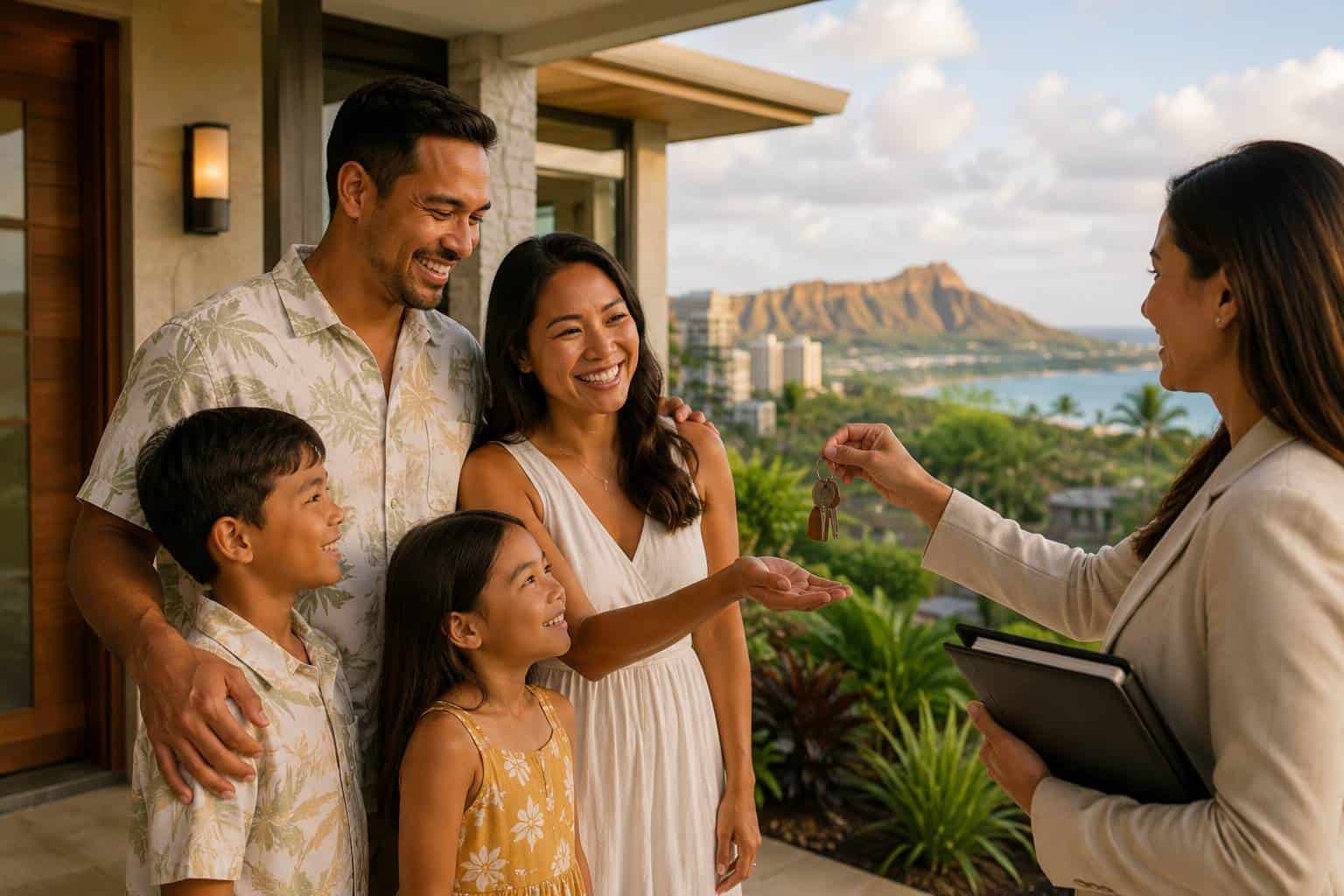
Signing of loan and escrow documents often happens several days before the recording date. Many buyers complete this remotely through a notary if they are off-island. On the scheduled closing day, the lender funds the loan (if applicable), escrow submits the deed and related documents for recording, and the Bureau of Conveyances records the transfer. Once recording is confirmed, escrow disburses funds and the keys are released to you.
You are now the owner.
Why the Process Feels Different on O‘ahu
Island logistics, the escrow structure, termite considerations, and the dual recording systems create a process that rewards preparation and local knowledge. Working with a team that understands neighborhood nuances, association requirements, and typical inspection findings on O‘ahu reduces surprises and keeps timelines realistic.
The Hawai‘i Modern Realty Difference
At Hawai‘i Modern Realty we combine deep local roots with modern tools. Our advisors know the distinct rhythms of Kailua, Kapolei, Honolulu, Kāne‘ohe, and the communities in between. We use AI-powered search on modernhawaii.com that lets you describe what you want in everyday language rather than relying only on filters. That technology surfaces better matches while our local team provides the strategy, negotiation, and hands-on guidance that data alone cannot replace. Personalized service remains the priority. Every client receives a plan built around their specific goals, timeline, and lifestyle.
Areas We Serve and Property Expertise
We guide buyers across O‘ahu and beyond, with particular strength in:
- Single-family homes and luxury residences
- Condominiums and townhomes, including association document review
- Oceanfront, view, and golf-course properties
- Investment and rental opportunities
- Open-house support and off-market insights
- First-time buyer guidance and move-up or downsizing strategies
Whether you are looking in Honolulu, the Windward side, Central O‘ahu, or the growing communities of Kapolei and Ewa, our local advisors bring neighborhood-level knowledge to every conversation.
Frequently Asked Questions
How long does it take to buy a home on O‘ahu after an offer is accepted?
Most financed purchases close in 30 to 45 days. Cash transactions can close in as few as 15 to 21 days when title is clear and contingencies are limited.
How much is the earnest money deposit?
It is commonly 1 to 3 percent of the purchase price, though the exact amount is negotiated in the contract. Funds are typically due within one to three business days of acceptance.
Is a termite inspection required?
It is standard practice on O‘ahu and often required by lenders because of the climate. The cost and responsibility are addressed in the contract.
Can I close if I am not on the island?
Yes. Many buyers complete signing remotely through a notary or mail-away process. Escrow and your advisor coordinate the logistics.
What happens if the appraisal comes in low?
The parties may renegotiate the price, the buyer may bring additional cash, or the buyer may cancel if the appraisal contingency is still in place. Your advisor helps evaluate options based on current market conditions.
Who pays closing costs on O‘ahu?
Both parties typically share costs. Buyers often cover loan fees, inspection costs, and a portion of escrow and title charges. Sellers commonly pay the conveyance tax, the owner’s title policy, and commissions. Exact amounts depend on the contract and loan type.
When do I receive the keys?
Keys are released after the deed has been recorded and escrow confirms the transfer is complete. This usually occurs on the scheduled closing day once recording is verified.
Ready to Take the Next Step?
Knowing the timeline is the first part of a confident purchase. Having the right local partner makes the journey clearer and more efficient. If you are ready to explore homes on O‘ahu or simply want a conversation about what the process looks like for your situation, connect with a Hawai‘i Modern Realty advisor. We are here to listen, answer questions, and guide you from offer to keys with care and local insight.
Visit modernhawaii.com or reach out to start the conversation.