Table of Contents
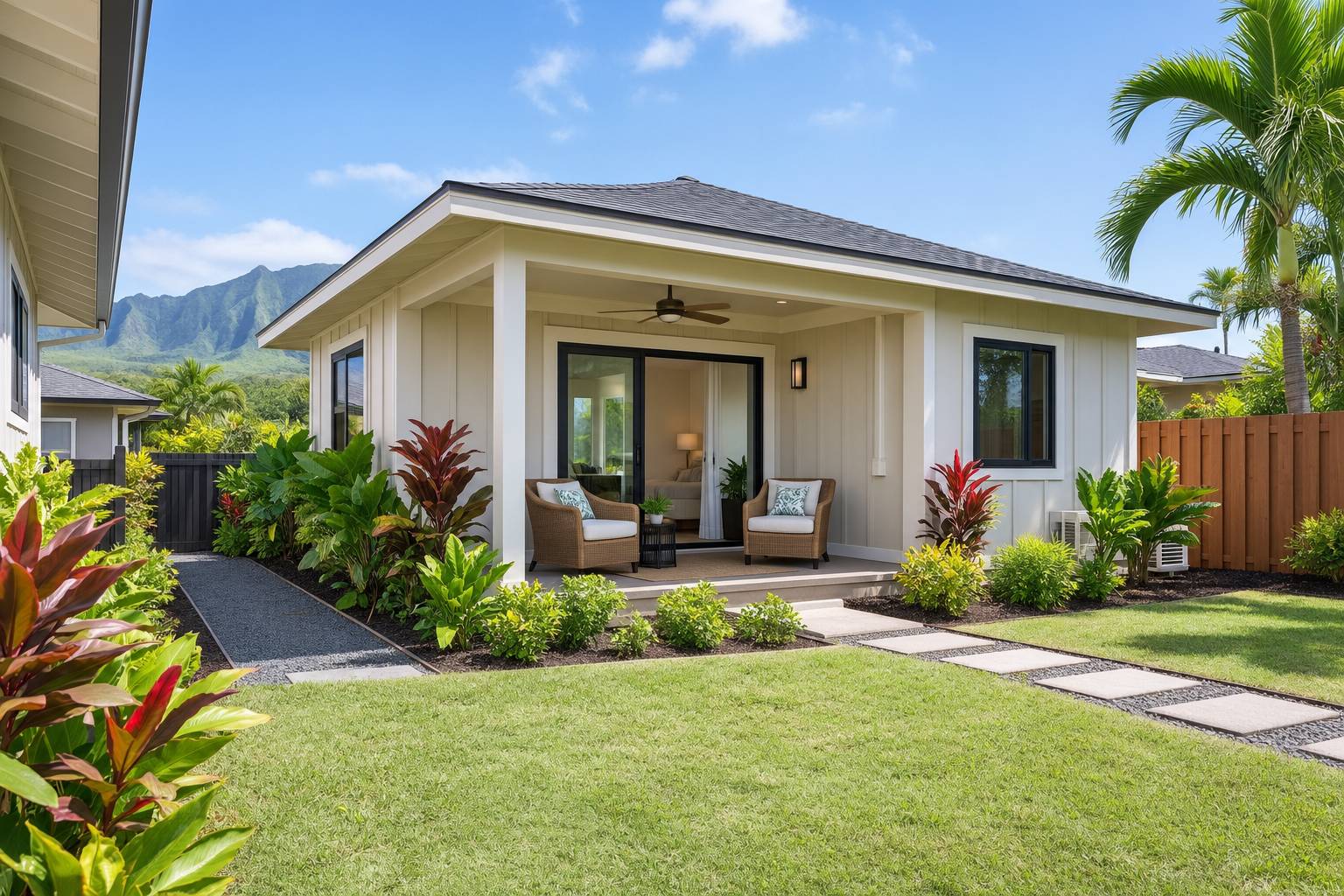
Multi-generational living has long been part of life on O‘ahu. Families often share space so kūpuna can stay close, adult children can save while building independence, or relatives can help with childcare and daily support. Accessory dwelling units (ADUs) and ohana units make this practical under Honolulu’s Land Use Ordinance.
Recent updates through Ordinance 25-2 (most provisions effective September 30, 2025) expanded options. Homeowners can now place one ADU and one ohana unit on the same qualifying lot, creating up to three legal dwellings including the primary home. This change supports family housing while keeping density controlled.
ADU vs. Ohana Unit: Core Differences
Both add a second (or third) dwelling on a single zoning lot, yet the rules and intended uses differ.
Feature | Accessory Dwelling Unit (ADU) | Ohana Unit |
|---|---|---|
Occupancy | Long-term residential use; can be rented to non-family (minimum lease periods apply; no short-term vacation rentals) | Restricted to persons related by blood, adoption, guardianship, marriage, or other authorized custodial relationship to occupants of the primary dwelling |
Size limit | 500 sq ft on lots up to 4,999 sq ft; 1,000 sq ft on lots 5,000 sq ft or larger | No separate fixed square-footage cap, but the unit must comply with applicable zoning limits for building area, setbacks, height, lot coverage, and other development standards. |
Structure | Attached or detached; can be new construction or conversion of existing legal structure, attic, or basement | Attached or detached; can be new or conversion |
Parking | One off-street stall (may be compact); limited waivers near certain transit stops in designated plan areas | Subject to district parking rules; adjustments may apply |
Key restriction | Not allowed on CPR lots; a lot with an ADU cannot later be placed under a condominium property regime | Deed restrictions and covenants required; cannot separate ownership via CPR |
These distinctions matter. An ADU offers more flexibility for rental income or non-family housing. An ohana unit is designed for extended family living and carries occupancy covenants that run with the land.
Current Honolulu Zoning Framework
ADUs and ohana units may be permitted in eligible residential and Country Districts, subject to applicable zoning standards, infrastructure capacity, and other requirements.
They are not allowed in planned development housing, cluster housing, zero-lot-line projects, or on landlocked lots.
Key practical requirements include:
Sufficient wastewater, water supply, roadways, and first-responder capacity. Agencies review these before permits advance.
Compliance with all underlying zoning standards: setbacks, height, lot coverage, and building area.
Recorded covenants confirming long-term residential use only, no short-term rentals or bed-and-breakfast operation, and the prohibition on creating a CPR that separates the units.
One ADU maximum per zoning lot. An existing or concurrent ohana unit does not count against that ADU limit under the updated rules.
Ordinance 25-2 simplified size limits and opened the path for an ADU on lots that already contain an ohana unit or two principal dwellings (provided the lot is not under a CPR). State-level direction continues to encourage more accessory housing, so local rules may evolve further. Always confirm the latest standards with the Department of Planning and Permitting (DPP) before design or construction begins.
Practical Considerations for Homeowners
Adding either unit affects daily life, costs, and long-term value. Construction costs on O‘ahu remain high because of materials, labor, and permitting timelines. Utility upgrades, driveway adjustments, and infrastructure checks often add time and expense. Once complete, a legal ADU or ohana unit can increase usable living space and, in many cases, support higher assessed value and rental potential (for ADUs).
Parking, privacy, and neighbor impacts require careful site planning. Compact lots common in older Honolulu neighborhoods benefit from the new smaller-size allowance (500 sq ft), while larger lots can support the full 1,000 sq ft ADU.
If your goal is pure multi-generational living with family occupancy, the ohana path aligns closely with traditional use. If you want the option to rent long-term or house non-family occupants, the ADU path provides that flexibility.
How Hawai‘i Modern Realty Approaches These Projects
We help buyers and homeowners evaluate properties with multi-generational living in mind. Our advisors can help you identify questions about a property's zoning, existing structures, lot configuration, and potential ADU or ohana options. When a project requires design, permitting, or other technical review, we can help connect you with the appropriate professionals. We focus on the property, your intended use, and the questions that need to be answered before you move forward.
Because every property has different zoning, lot, and infrastructure considerations, we focus on the specific questions that matter for your situation rather than relying on a one-size-fits-all checklist.
Areas We Serve and Property Expertise
We work across O‘ahu and maintain strong coverage of:
Single-family homes suitable for multi-generational expansion
Condominiums and multi-family properties
Luxury residences and estate lots
Rental and investment properties
Open houses and off-market opportunities
Neighborhoods throughout Honolulu, Windward, Central, and Leeward O‘ahu
Whether you are evaluating an existing home for ADU potential or searching for a property already set up for extended family, we bring market knowledge and practical zoning awareness to the conversation.
Estimate the Value Impact
Adding legal living space often changes a property’s market position. Use our free home-worth calculator to explore how improvements and additional units can influence estimated value based on recent local sales data:
For financing considerations related to construction or purchase, the mortgage calculator is also available:
Frequently Asked Questions
Can I have both an ADU and an ohana unit on the same lot?
Yes, under current Ordinance 25-2 rules. A qualifying lot may include the primary dwelling, one ADU, and one ohana unit, provided all development standards, infrastructure capacity, and covenant requirements are met and the lot is not under a CPR.
What is the maximum size for an ADU on O‘ahu?
500 square feet of floor area on lots up to 4,999 square feet, and 1,000 square feet on lots of 5,000 square feet or larger. Ohana units have no fixed size limit but must comply with the zoning district’s building area, setback, and height standards.
Can I rent an ohana unit to non-family members?
No. Ohana units are restricted to related family members under the recorded covenants. ADUs may be rented long-term to non-family occupants (subject to minimum lease terms and the prohibition on short-term vacation use).
Are ADUs allowed on condominium property regime (CPR) lots?
No. ADUs are not permitted on CPR lots, and a lot that contains an ADU cannot later be submitted to a CPR that separates ownership of the units.
Do I need to live on the property to have an ADU?
Ordinance 25-2 removed the previous ADU owner-occupancy requirement. However, current covenant and permitting requirements still apply, including restrictions on short-term rentals and CPR separation. Confirm the requirements and current covenant form with the Department of Planning and Permitting before proceeding.
How long does the permitting process take?
How long permitting takes depends on the project, required infrastructure reviews, and DPP workload. Ask DPP about current review requirements and timelines before starting design or construction.
Will adding an ADU or ohana unit raise my property taxes?
Adding permitted living space may affect a property's assessed value and property taxes. The effect depends on the County's assessment, property classification, and any applicable exemptions. Check with the City and County of Honolulu or a qualified tax professional for your situation.
Ready to Plan Multi-Generational Living on O‘ahu?
Rules change and every lot has unique constraints. The information above reflects the framework in place following Ordinance 25-2 and related guidance available through mid-2026. Verify all details directly with the City and County of Honolulu Department of Planning and Permitting before making decisions or beginning work.
If you are considering multi-generational living, evaluating a property for ADU or ohana potential, or simply want a clear picture of what is possible on a specific lot, connect with a Hawai‘i Modern Realty advisor. We will help you sort the options with local insight and practical next steps.