Table of Contents
Mānoa Valley and other older Honolulu neighborhoods contain some of O‘ahu’s most distinctive residential architecture. Craftsman bungalows and Plantation-style cottages from the early twentieth century still line many streets, offering character that modern construction rarely replicates. Ownership of these homes brings both rewards and responsibilities that differ from newer properties.
At Hawai‘i Modern Realty we help buyers and owners evaluate historic homes with clear expectations about maintenance, potential tax benefits, and the practical realities of living in an older structure.
Craftsman and Plantation Styles on O‘ahu
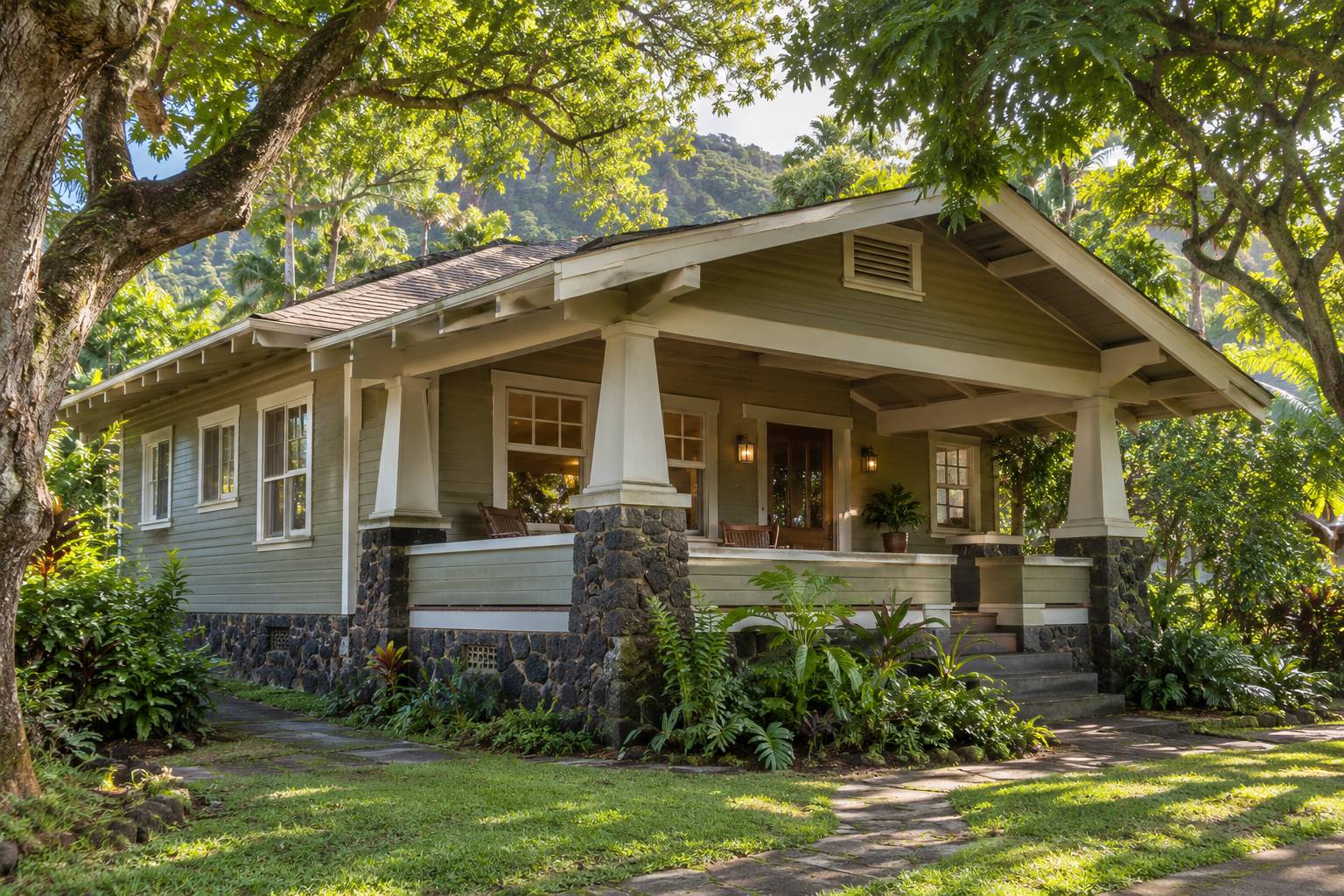
Craftsman bungalows became popular in Hawai‘i in the early 1900s as Mānoa and similar valleys transitioned from agricultural land to residential neighborhoods. Typical features include low-pitched roofs with wide overhanging eaves, exposed rafters or decorative brackets, lava-rock or post-and-pier foundations, multi-pane windows, and an emphasis on natural materials. Many were designed for the local climate, with deep porches and good cross-ventilation.
Plantation-style cottages reflect the island’s sugar and pineapple era. These homes often use single-wall construction, board-and-batten or clapboard siding, hipped roofs, open eaves, and simple lanai forms. They were built for practicality and climate response rather than formal ornamentation.
Both styles appear throughout Mānoa, as well as in neighborhoods such as Kaimukī, Nu‘uanu, and parts of the windward and central areas. Some individual homes are listed on the Hawai‘i Register of Historic Places; others contribute to the overall historic character of their street without formal designation.
Historic Designation and Property Tax Benefits
Owners of residential properties listed on the Hawai‘i Register of Historic Places may apply for a City and County of Honolulu property tax exemption by dedicating the property to historic preservation. Approved properties typically pay a minimum annual tax (currently in the low hundreds of dollars) rather than taxes based on full assessed value, provided the owner meets ongoing conditions.
Key requirements generally include maintaining the property in at least average condition according to preservation standards, providing visual access from a public way or scheduled alternative viewing opportunities, and installing an approved historic plaque. The dedication runs for a minimum period and renews automatically if conditions continue to be met. Failure to comply can result in cancellation and rollback of prior tax benefits with penalties.
The exemption is an incentive for stewardship, not a free pass on maintenance. Owners must still invest in appropriate repairs and follow guidelines when making changes.
Practical Ownership Realities
Older wood-frame homes in Hawai‘i’s climate face ongoing challenges from moisture, termites, and material aging. Single-wall construction, common in many Plantation-style cottages, offers limited insulation and can make temperature control and sound isolation more difficult. Original electrical and plumbing systems often need updating. Canec ceilings or walls (a pressed sugarcane product used in mid-century interiors) require careful handling if disturbed because of historical arsenic content in some formulations.
Routine maintenance—keeping roofs sound, managing drainage, addressing termite risk, and protecting wood from prolonged moisture—is essential. Renovations that affect historic character may require review by the State Historic Preservation Division if the property is formally listed or if the owner is seeking or maintaining tax benefits. Sensitive updates that preserve significant features while improving livability are usually preferred over wholesale modernization.
Insurance, particularly for older structures, can be more complex or costly. Buyers should obtain thorough inspections that specifically address structural integrity, pest history, roof condition, and systems.
Living in Mānoa and Similar Neighborhoods
Mānoa offers a residential setting with mature trees, proximity to the University of Hawai‘i at Mānoa, and a strong sense of neighborhood continuity. Many streets retain a mix of early- and mid-twentieth-century homes. Walkability varies by street, and traffic patterns reflect the valley’s layout. The area appeals to buyers who value architectural character and a quieter urban-residential environment over high-rise or resort living.
Similar older stock appears in other established Honolulu neighborhoods. Each has its own micro-climate, topography, and community character that influence daily life and long-term ownership costs.
Areas We Serve and Property Expertise
Hawai‘i Modern Realty works with buyers and sellers of historic and character homes across O‘ahu. Our advisors regularly assist with:
Craftsman and Plantation-style residences in Mānoa and surrounding valleys
Properties listed or eligible for historic designation
Comparative market analysis that accounts for condition, updates, and historic features
Coordination with inspectors experienced in older wood-frame construction
Guidance on the practical implications of historic tax programs
Local knowledge of neighborhood patterns and typical ownership considerations helps clients match the right property to their lifestyle and stewardship capacity.
Why Working with Hawai‘i Modern Realty Is Different
We combine familiarity with O‘ahu’s historic residential architecture and the realities of ownership with modern tools and personalized guidance. Advisors help clients evaluate whether a particular home’s character, condition, and ongoing requirements align with their goals. The focus remains on clear information and practical next steps.
With more than a decade of experience across Hawai‘i, over $2.7 billion in closed sales, and a team of 160-plus local advisors, we support clients through the purchase or sale of distinctive older properties.
Our Home Worth tool and Market Analysis resources can help frame value in the context of comparable historic and updated homes.
Frequently Asked Questions
Do all older homes qualify for the historic tax exemption?
No. The property must be listed on the Hawai‘i Register of Historic Places (individually or as a contributing resource) and the owner must successfully complete the dedication process and meet ongoing conditions.
Can I renovate a historic home?
Yes, but changes that affect significant historic features may require review, especially if the property is formally listed or receiving tax benefits. Sensitive updates that retain character are generally preferred.
Are Craftsman and Plantation homes more expensive to maintain?
They often require more attentive ongoing care because of age, materials, and climate exposure. Budgeting for roof, pest, moisture, and systems work is advisable.
Is single-wall construction a problem?
It is common in many older island homes. It can affect insulation, sound, and the ease of running modern systems. Many owners live comfortably in well-maintained single-wall houses; others prefer double-wall updates.
How do I know if a home is on the historic register?
Check the Historic Hawai‘i Foundation listings, State Historic Preservation Division records, or the property’s public tax records for designation notes.
Does historic designation restrict what I can do with the property?
Formal listing and participation in the tax program come with stewardship expectations. Purely private older homes without designation face fewer formal restrictions but still benefit from careful maintenance.
Ready to Explore Historic Homes on O‘ahu?
Craftsman and Plantation-style properties offer a tangible connection to O‘ahu’s residential past. Ownership works best when the buyer values the architecture and is prepared for the practical demands of an older home.
If you are considering a historic or character property in Mānoa or elsewhere on the island, connect with one of our local advisors. We can help you review recent sales, understand condition and designation implications, and evaluate whether a particular home fits your plans. Reach out today and let’s take a closer look together.