Table of Contents
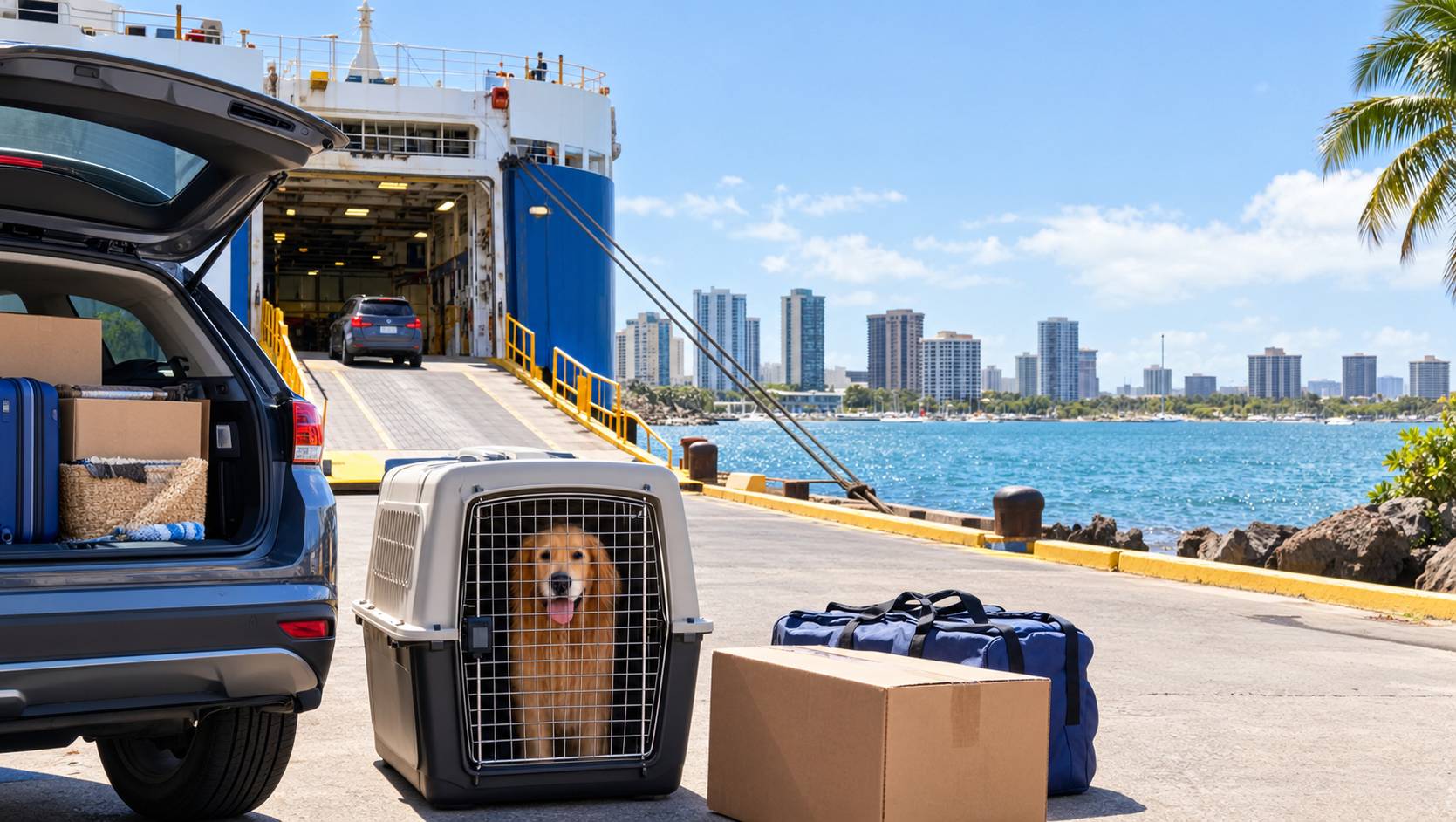
Relocating to O‘ahu involves more than booking flights. Vehicles, pets, and household goods each follow specific processes shaped by ocean shipping schedules, agricultural rules, and Hawai‘i’s unique pet entry requirements. Starting early and understanding the sequence reduces cost, stress, and delays.
At Hawai‘i Modern Realty we regularly assist clients who are coordinating a move alongside a home purchase. Clear logistics planning helps the housing search and the physical move stay aligned.
Shipping a Car to O‘ahu
Most vehicles travel by ocean roll-on/roll-off service from West Coast ports. Matson and Pasha Hawaii are the primary carriers. Honolulu Harbor is the main receiving port; neighbor-island destinations usually require an additional inter-island barge transfer.
Typical costs for a standard passenger vehicle from a West Coast port to Honolulu currently range from roughly $1,500 to $2,200, depending on vehicle size, exact origin, and service level. East Coast or Midwest origins add inland trucking and raise the total. Neighbor-island delivery adds several hundred dollars and extra transit time.
Preparation steps
Obtain quotes from both major carriers and book four to six weeks ahead, especially during peak summer season.
Clean the vehicle thoroughly (required for agricultural inspection).
Reduce fuel to one-quarter tank or less.
Remove personal items, aftermarket accessories, and deactivate alarms.
Document existing conditions with photos.
Have title, registration, and any lienholder authorization ready.
Transit from California ports to Honolulu is often 7–14 days at sea, with a total door-to-door time of two to four weeks once inland legs are included. Upon arrival, the vehicle undergoes agricultural inspection before release. Plan for Hawai‘i registration, safety inspection, and insurance once the car is on island.
Military members on official orders often ship one privately owned vehicle through the Vehicle Processing Center system at government expense. Additional vehicles or civilian moves follow commercial rates.
Bringing Pets: The 5-Day-or-Less Program
Hawai‘i is rabies-free and enforces strict entry rules for dogs and cats. Pets that meet all pre-arrival requirements can qualify for Direct Airport Release or the 5-Day-or-Less program instead of the full 120-day quarantine.
Core requirements for the shortened program
ISO-compatible microchip implanted before vaccinations.
At least two rabies vaccinations, with the most recent given more than 30 days (and within the vaccine’s licensed duration) before arrival.
Passing OIE-FAVN rabies antibody blood test with results of at least 0.5 IU/ml.
Mandatory waiting period of at least 30 days after the laboratory receives the successful blood sample.
Health certificate issued within 14 days of arrival, plus required tick treatment.
Completed AQS-279 import form and supporting documents submitted to the Animal Quarantine Station at least 10 days before arrival for Direct Airport Release eligibility.
Current fees (subject to change) are approximately $185 for Direct Airport Release when documents arrive on time, or $244 for the 5-Day-or-Less program. The full 120-day quarantine costs $1,080 per pet. Early arrival before eligibility can incur additional daily charges.
Start the process four to six months before travel. Puppies and kittens face the same rules and often need extra time to complete the vaccination and waiting sequence. Service animals follow the same medical requirements.
Confirm the latest checklist and fees directly with the Hawai‘i Department of Agriculture Animal Quarantine Branch, as details can be updated.
Shipping Household Goods
Household goods typically move by ocean container (full container load or less-than-container-load) from West Coast ports. Transit times from California to Honolulu commonly run one to three weeks door-to-door once packing, port handling, and delivery are included. East Coast origins take longer.
Cost depends on volume, origin, packing level, and whether the shipment is a full container or shared space. Smaller moves may use lift vans; larger households often require 20- or 40-foot containers. Full-service movers handle packing, inland transport, ocean freight, agricultural clearance, and final delivery. Self-packed options or military Personally Procured Moves (PPM/DITY) are available for those who prefer more control.
All shipments undergo agricultural inspection on arrival. Items that can harbor pests (soil, plants, certain foods) face restrictions. Military members on orders generally ship household goods through the Defense Personal Property System with weight allowances based on rank and dependency status.
Obtain multiple quotes early and confirm insurance coverage for high-value items. Temporary storage is often available if housing is not ready on arrival.
Quick Logistics Overview
Item | Typical Timeline | Key Cost Drivers | Main Considerations |
|---|---|---|---|
Vehicle | 2–4 weeks door-to-door | Origin distance, vehicle size, neighbor island | Clean thoroughly; book early; plan registration |
Pets | 4–6 months prep + arrival | Program qualification, document timing | Microchip, vaccinations, FAVN test, 30-day wait |
Household goods | 1–3+ weeks (West Coast) | Volume, packing service, origin | Agricultural inspection; container vs. shared |
Coordinating the Move with Housing
Align shipping schedules with your housing timeline. On-base waitlists, off-base rental availability, or purchase closing dates all affect when vehicles, pets, and household goods should arrive. Temporary lodging and short-term storage can bridge gaps.
If you are purchasing, our Mortgage Calculator can help model monthly costs while logistics are finalized. Advisors familiar with military and civilian relocations can coordinate timing around inspections, appraisals, and closing.
Areas We Serve and Property Expertise
Hawai‘i Modern Realty assists relocating families across O‘ahu and the neighbor islands. Our advisors regularly work with clients who are:
Coordinating vehicle and household goods shipments with a home purchase
Navigating military orders and on-base or off-base housing decisions
Searching for condominiums and single-family homes near major installations or urban centers
Planning second-home or investment purchases alongside a permanent move
Evaluating neighborhoods that fit commute, school, and lifestyle needs after arrival
Local knowledge of typical relocation timelines and neighborhood logistics helps keep the housing search practical.
Why Working with Hawai‘i Modern Realty Is Different
We combine familiarity with the practical realities of moving to O‘ahu with modern tools and personalized guidance. Advisors help clients sequence housing decisions alongside shipping schedules so the overall transition stays manageable. The focus remains on clear information and realistic next steps.
With more than a decade of experience across Hawai‘i, over $2.7 billion in closed sales, and a team of 160-plus local advisors, we support families through both the logistics of arriving and the process of finding the right home.
Frequently Asked Questions
How far in advance should I book car shipping?
Four to six weeks is advisable, especially during peak summer months when military and civilian moves increase demand.
Can my pet avoid the full 120-day quarantine?
Yes, if all pre-arrival requirements for the 5-Day-or-Less or Direct Airport Release program are completed on schedule. Start preparation months ahead.
Do I need to empty my car completely?
Yes. Personal belongings must be removed. The vehicle should be cleaned for agricultural inspection, and fuel limited to one-quarter tank or less.
What happens if household goods arrive before housing is ready?
Most carriers and movers offer temporary storage. Confirm rates and access procedures in advance.
Are there restrictions on what I can ship?
Yes. Agricultural rules limit soil, certain plants, and some food items. Check current Hawai‘i Department of Agriculture guidelines for prohibited or restricted materials.
Does the military cover shipping costs?
For official Permanent Change of Station orders, the government typically covers one privately owned vehicle and household goods within weight limits. Additional vehicles or excess weight are the member’s responsibility.
Ready to Align Your Move with Housing Plans?
Shipping a car, preparing pets, and moving household goods to O‘ahu requires advance planning, but the steps are well established. Coordinating those logistics with your housing search creates a smoother transition.
If you are planning a move and need guidance on neighborhoods, purchase timelines, or current market conditions, connect with one of our local advisors. We can help you sequence the practical pieces so everything arrives in the right order. Reach out today and let’s build a clear plan.