
Table of Contents
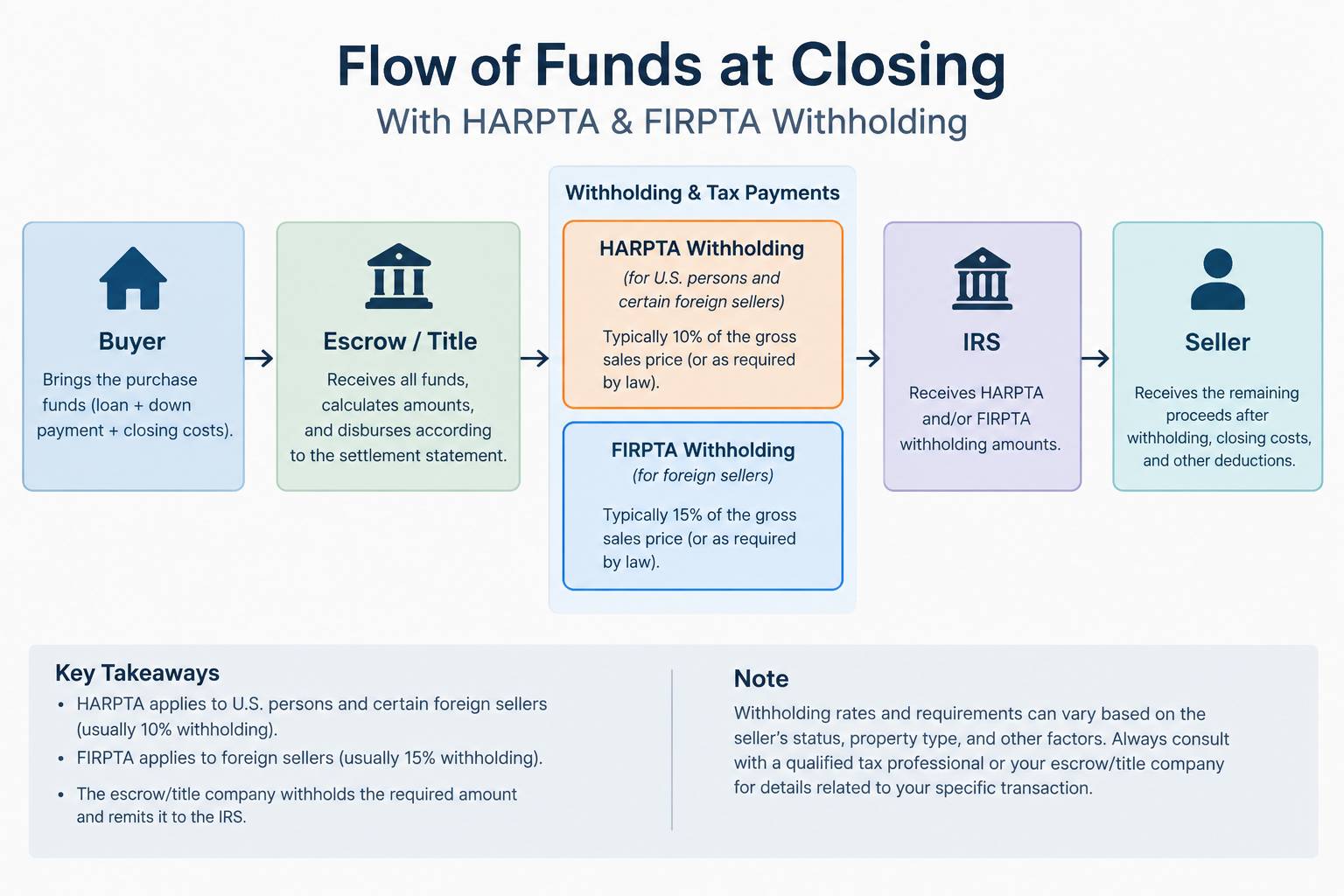
Two withholding rules frequently surface in O‘ahu real estate transactions: HARPTA (Hawai‘i Real Property Tax Act) and FIRPTA (Foreign Investment in Real Property Tax Act). Both require the buyer to withhold a percentage of the sales price at closing and remit it to the tax authorities unless a valid exemption or reduced-withholding certificate applies. Understanding who is subject to each rule and how exemptions work helps both sides avoid last-minute surprises.
At Hawai‘i Modern Realty we regularly coordinate with escrow, title, and tax professionals so clients know what documentation is needed before closing day.
What Is HARPTA?
HARPTA is a Hawai‘i state law. When a nonresident of Hawai‘i sells Hawai‘i real property, the buyer must generally withhold 7.25 percent of the amount realized (typically the gross sales price) and send it to the Hawai‘i Department of Taxation. The withheld amount is a prepayment of potential Hawai‘i income tax on the gain, not an extra tax. The seller later files a Hawai‘i return to claim a refund of any excess or to pay any remaining balance.
Residency for HARPTA purposes is determined by Hawai‘i tax rules. A seller who is a Hawai‘i resident can usually avoid withholding by providing the proper residency certification. Nonresident sellers, including mainland U.S. owners and foreign persons, are the primary group affected.
Common exemptions and relief options include:
Certification that the seller is a Hawai‘i resident
Certification that the transfer qualifies for full nonrecognition treatment under a 1031 exchange (Form N-289)
Application for a reduced withholding certificate (Form N-288B) when little or no gain is expected or proceeds are insufficient
Certain principal-residence situations that meet statutory tests
The buyer (or the escrow company acting for the buyer) is responsible for the withholding if no valid exemption is provided. Failure to withhold can leave the buyer liable.
What Is FIRPTA?
FIRPTA is a federal law that applies when a foreign person (non-U.S. citizen or non-resident alien for tax purposes) disposes of a U.S. real property interest. The buyer must generally withhold 15 percent of the amount realized and remit it to the Internal Revenue Service. Like HARPTA, the withheld amount is a prepayment of potential federal tax.
Exemptions and reduced rates can apply in specific situations, such as when the property will be used as the buyer’s residence and the sales price is $300,000 or less, or when the seller obtains a withholding certificate from the IRS showing that a lower amount (or zero) is appropriate. The rules are technical and depend on the parties’ status and the use of the property.
Foreign sellers of O‘ahu property can face both HARPTA and FIRPTA at the same closing. Each regime has its own forms and procedures, so coordination is essential.
How the Two Rules Interact at Closing
Escrow companies on O‘ahu are familiar with both sets of requirements. Typical steps include:
Determining the seller’s residency and foreign-status early in the transaction.
Collecting the appropriate exemption forms or withholding certificates before closing.
Calculating and remitting any required withholding.
Providing the seller with documentation needed for later tax filings.
For a nonresident U.S. seller, only HARPTA usually applies. For a foreign seller, both HARPTA (7.25 percent) and FIRPTA (15 percent) can apply unless exemptions are secured. The combined cash impact at closing can be substantial on higher-priced properties.
Buyers should not assume that “the seller will handle it.” The legal duty to withhold falls on the buyer if the required certifications are missing.
Practical Tips for Sellers
Confirm your residency or foreign status early and gather supporting documents.
If you plan a 1031 exchange, coordinate Form N-289 with your qualified intermediary and escrow well before closing.
If you expect little or no gain, consider applying for a reduced-withholding certificate in advance; these applications have filing deadlines.
Budget for the possibility of withholding so net proceeds at closing match your expectations.
Work with a tax professional familiar with Hawai‘i and federal real-property rules.
Practical Tips for Buyers
Ask early whether the seller is a Hawai‘i resident or a foreign person.
Confirm that escrow has received all necessary exemption forms before final figures are calculated.
Understand that if valid exemptions are not provided, you (or escrow on your behalf) must withhold and remit the required amounts.
Keep copies of all withholding-related documents for your records.
Areas We Serve and Property Expertise
Hawai‘i Modern Realty assists buyers and sellers across O‘ahu and the neighbor islands with transactions that involve HARPTA or FIRPTA considerations. Our advisors regularly work with:
Nonresident sellers of residential and investment property
Foreign sellers navigating both state and federal withholding
Buyers purchasing from nonresident or foreign owners
1031 exchange participants seeking HARPTA relief
Coordination with escrow, title, and tax professionals
Local experience with typical documentation and timing helps keep closings on schedule.
Why Working with Hawai‘i Modern Realty Is Different
We combine practical familiarity with Hawai‘i’s closing practices and the operational details of HARPTA and FIRPTA with modern tools and personalized guidance. Advisors help clients identify potential withholding issues early and connect them with the right professionals so the transaction stays on track. The focus remains on clear information and realistic expectations.
With more than a decade of experience across Hawai‘i, over $2.7 billion in closed sales, and a team of 160-plus local advisors, we support clients through the full transaction cycle, including the tax-related steps that arise at closing.
Our Mortgage Calculator can help buyers model overall costs, while sellers can use our Home Worth and Market Analysis tools to frame net proceeds after estimated expenses.
Frequently Asked Questions
Who is responsible for HARPTA withholding?
The buyer must withhold and remit the tax unless the seller provides a valid exemption certificate. Escrow usually handles the mechanics.
Does HARPTA apply to Hawai‘i residents?
Generally no, if the seller properly certifies Hawai‘i residency. Nonresidents are the primary focus of the rule.
Can a 1031 exchange avoid HARPTA withholding?
A fully deferred exchange can qualify for exemption via Form N-289. Recognition of any gain typically disqualifies the full exemption.
Do foreign sellers face both HARPTA and FIRPTA?
Yes. Both regimes can apply unless separate exemptions or reduced-withholding certificates are obtained for each.
Is the withheld amount an extra tax?
No. It is a prepayment. The seller files a tax return to reconcile the actual liability and claim any refund.
When should exemption forms be submitted?
As early as possible. Some reduced-withholding applications have specific advance filing deadlines. Last-minute submissions risk delays or full withholding.
Ready to Navigate Withholding with Confidence?
HARPTA and FIRPTA are routine parts of many O‘ahu transactions, yet the documentation and timing matter. Addressing residency, foreign status, and possible exemptions early keeps the closing process smoother for everyone involved.
If you are buying or selling property and want guidance on how these rules may affect your transaction, connect with one of our local advisors. We can help you understand the typical requirements, coordinate with escrow, and keep the process moving. Reach out today and let’s clarify the next steps.