Table of Contents
A home inspection on O‘ahu is not a mainland-style checklist. Hawai‘i’s climate, construction methods, and island-specific pests create issues that rarely appear in other markets. Buyers and their lenders pay close attention to these findings. Sellers who understand them early can address problems before they become negotiation leverage or deal-breakers.
At Hawai‘i Modern Realty, we guide sellers through this process with clear local knowledge. The goal is simple: present a property that stands up to scrutiny so the transaction moves forward with fewer surprises.
What a Standard Home Inspection Covers on O‘ahu
A typical residential inspection examines the major systems and visible structure of the home. Inspectors follow standards similar to those used by the American Society of Home Inspectors. They look at:
Roof covering, flashing, and drainage
Exterior walls, windows, doors, and grading
Foundation and structural framing (where accessible)
Plumbing supply and drainage
Electrical panels, wiring, and outlets
Heating, cooling, and ventilation equipment
Interior finishes, floors, and ceilings
Attic, crawlspace, or under-house areas
On O‘ahu the same categories receive extra scrutiny because of humidity, salt air, intense sun, and year-round pest activity. A standard inspection does not replace a separate Wood-Destroying Organism (WDO) or termite inspection. Most lenders require the termite report, and the Hawai‘i Association of REALTORS purchase contract treats it as a standard contingency.
Local Defects That Appear Most Often
O‘ahu’s environment produces a consistent set of findings. Research from the University of Hawai‘i and local inspectors points to termites as one of the costliest issues, with statewide control and repair expenses long estimated in the range of $100 million per year. Moisture, corrosion, and roof wear follow closely.
Termites and Wood-Destroying Organisms
Both Formosan subterranean termites and drywood termites thrive in Hawai‘i’s climate. Inspectors and licensed pest control operators look for:
Mud tubes on foundations or walls
Frass (termite droppings) near baseboards or window sills
Hollow-sounding wood or blistered paint
Discarded wings after swarming events
Conditions that invite infestation, such as wood-to-soil contact or excess moisture
A Termite Inspection Report (TIR) must be completed by a pest control operator licensed in the appropriate category. The report uses the state’s PC-9 form and is typically valid for only about 15 days. Under standard contract terms, the seller usually pays for the inspection and for treatment of active infestations. Repair of existing damage is often negotiated separately.
Moisture, Mold, and Ventilation Problems
High humidity and frequent rain create ideal conditions for mold and wood rot. Inspectors check bathrooms, closets, attics, crawlspaces, and areas behind walls for signs of water intrusion. Poor ventilation in older single-wall homes common on the windward side (Kailua, Kāne‘ohe, Mānoa) often appears as mildew or staining. Clogged gutters and improper grading that directs water toward the foundation rank among the most frequent causes.
Roof and Exterior Deterioration
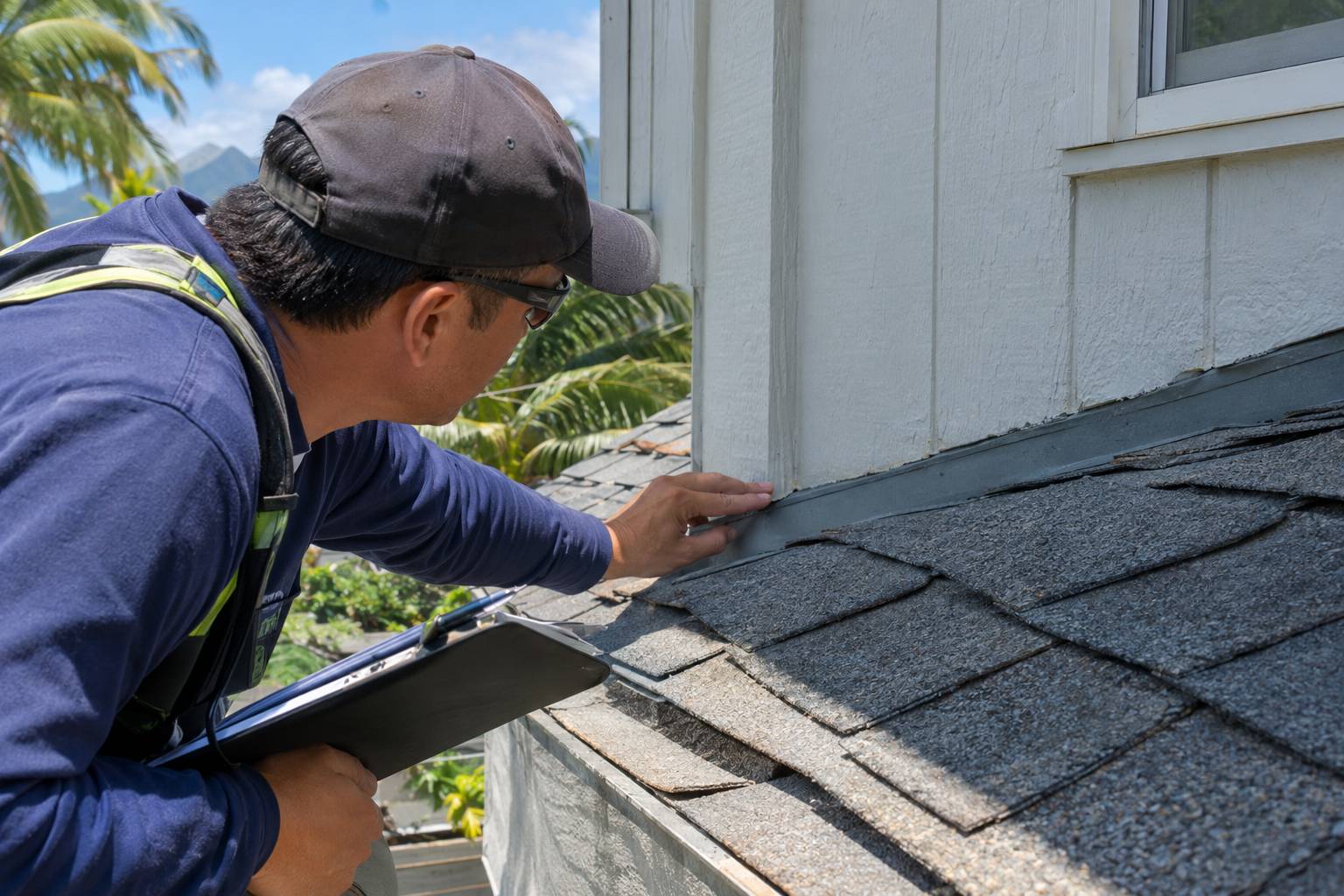
Intense ultraviolet exposure shortens the life of asphalt shingles. Salt air accelerates corrosion of metal flashing, fasteners, and gutters, especially within a mile of the coast. Inspectors look for missing or curled shingles, compromised flashing, and evidence of past leaks. Roof replacements on O‘ahu commonly range from $10,000 to $30,000 or more depending on size and materials.
Salt-Air Corrosion and Aging Systems
Coastal properties show faster deterioration of electrical panels, HVAC outdoor units, plumbing fixtures, and metal connectors. Older electrical panels may no longer meet current insurance or code expectations. Plumbing in homes built decades ago can show corrosion or outdated materials that trigger further evaluation.
Foundation, Drainage, and Structural Movement
Slope lots and expansive soils can produce settlement cracks or uneven floors. Inspectors note whether water drains away from the foundation and whether crawlspaces remain dry. Single-wall construction, still common in older neighborhoods, offers less resistance to moisture and pests than modern double-wall methods.
Common O‘ahu Inspection Findings at a Glance
Issue | Typical Signs | Why It Matters on O‘ahu | Seller Action Often Taken |
|---|---|---|---|
Termites / WDO | Mud tubes, frass, hollow wood | Year-round activity; lenders require clear report | Treat active infestation; negotiate damage repair |
Moisture / Mold | Staining, musty odor, soft wood | High humidity + rain; poor ventilation common | Fix source of water, improve airflow, remediate |
Roof wear | Curled/missing shingles, rusted flashing | UV + salt air shorten lifespan | Repair or replace before listing |
Salt corrosion | Rusted metal, degraded HVAC | Accelerated near coast | Clean, treat, or replace affected components |
Drainage / foundation | Standing water, cracks, sloping floors | Heavy rain + slope lots | Regrade, clear gutters, address settlement |
Electrical / plumbing | Outdated panels, corrosion | Insurance and safety concerns | Update panels or fixtures as needed |
How Sellers Can Prepare and Reduce Risk
The most effective step is a pre-listing inspection. Ordering one before the property goes on the market lets you identify and correct issues on your own timeline rather than under buyer pressure. Many sellers also obtain a separate termite inspection early so any required treatment is complete and documented.
Practical preparation steps include:
Clear vegetation and debris from the foundation and crawlspace
Clean gutters and ensure downspouts direct water away from the house
Address obvious roof or flashing problems
Improve ventilation in bathrooms and closets
Gather any prior termite treatment records or warranties
Make the attic, crawlspace, and electrical panel accessible for the inspector
When findings do appear during a buyer’s inspection period, a clear response strategy helps. Prioritize safety and structural items. Cosmetic issues can often be handled with credits or left for the buyer. Your advisor can help weigh repair costs against market conditions and the specific buyer’s financing.
Knowing Your Home’s Value Before You List
Before investing in repairs, it helps to understand current market value. Our free Home Worth tool gives a starting estimate based on recent local data. Pair that with a detailed Market Analysis from one of our advisors and you can decide which improvements deliver the strongest return.
Areas We Serve and Property Expertise
Hawai‘i Modern Realty works across O‘ahu and the neighboring islands. Our advisors regularly assist clients with:
Single-family homes and plantation-style properties in Mānoa, Kailua, and Kāne‘ohe
Condominiums and high-rises in Waikīkī, Ala Moana, and Kaka‘ako
Newer developments and townhomes in Kapolei, ‘Ewa Beach, and Mililani
Luxury and oceanfront residences
Multi-family and investment properties
Open-house strategy and marketing for homes of every style
Local knowledge of construction types, micro-climates, and neighborhood patterns helps us anticipate the issues an inspector is likely to flag in each area.
Why Working with Hawai‘i Modern Realty Is Different
We combine neighborhood-level experience with modern tools, including AI-assisted search on our website that lets buyers describe what they want in everyday language. For sellers, that same local insight translates into practical guidance on inspections, pricing, and negotiation. Our advisors help you evaluate repair priorities against current buyer expectations and financing requirements so decisions stay grounded in real market conditions rather than guesswork.
With more than a decade of work across Hawai‘i, over $2.7 billion in closed sales, and a team of 160-plus local advisors, we focus on clear communication and strategies built around each client’s goals.
Frequently Asked Questions
Is a home inspection required by law in Hawai‘i?
No. A general home inspection is not required by state law. Most purchase contracts include an inspection contingency, and lenders often require a clear termite report before funding a loan.
Who pays for the termite inspection and treatment?
Under the standard Hawai‘i Association of REALTORS purchase contract, the seller typically pays for the Termite Inspection Report and for treatment of any active infestation. Repair of existing damage is usually negotiated.
How long is a termite report valid?
Most reports are accepted by lenders for approximately 15 days from the date of the inspection. Timing the report close to closing is important.
Should I get a pre-listing inspection even if I plan to sell “as-is”?
Yes. Knowing the issues in advance allows you to price accurately, disclose properly, and reduce the chance of last-minute renegotiation or deal collapse.
What is the difference between a home inspection and a WDO/termite inspection?
A general home inspection covers structure and systems. A WDO inspection focuses specifically on termites and other wood-destroying organisms and must be performed by a licensed pest control operator.
How much does a typical O‘ahu home inspection cost?
General inspections for single-family homes commonly fall in the 700 range. Separate termite inspections often add 150 or more depending on the property size and access.
Ready to Prepare Your O‘ahu Home for Market?
Understanding what an inspector looks for on O‘ahu gives you a clear advantage. Addressing the most common local defects early protects your timeline and your bottom line.
If you are thinking about selling, start with a conversation. One of our local advisors can walk you through current market conditions, recommend trusted inspectors, and help you decide which improvements make sense for your property and your goals. Reach out today and let’s put a practical plan in place.