Table of Contents
Investment Realities: Population, Infrastructure, and Community Input
Financing: Higher Equity Requirements and Fewer Active Lenders
Moloka‘i’s commercial real estate market follows different rules than O‘ahu or Maui. With a resident population of roughly 7,345 and only a handful of commercial transactions each year, this is not a market built for rapid flips or high-volume rental plays. It is a relationship-driven, community-sensitive environment where the right small-scale investment can serve local needs—if you understand the island’s distinct constraints and opportunities.
This guide outlines inventory patterns, pricing realities, infrastructure limits, zoning and permitting timelines, financing options, and due diligence priorities specific to Moloka‘i. It draws on cross-island market knowledge so you can evaluate whether Moloka‘i aligns with your goals compared with other Hawaiian islands.
What Makes Moloka‘i’s Commercial Market Different
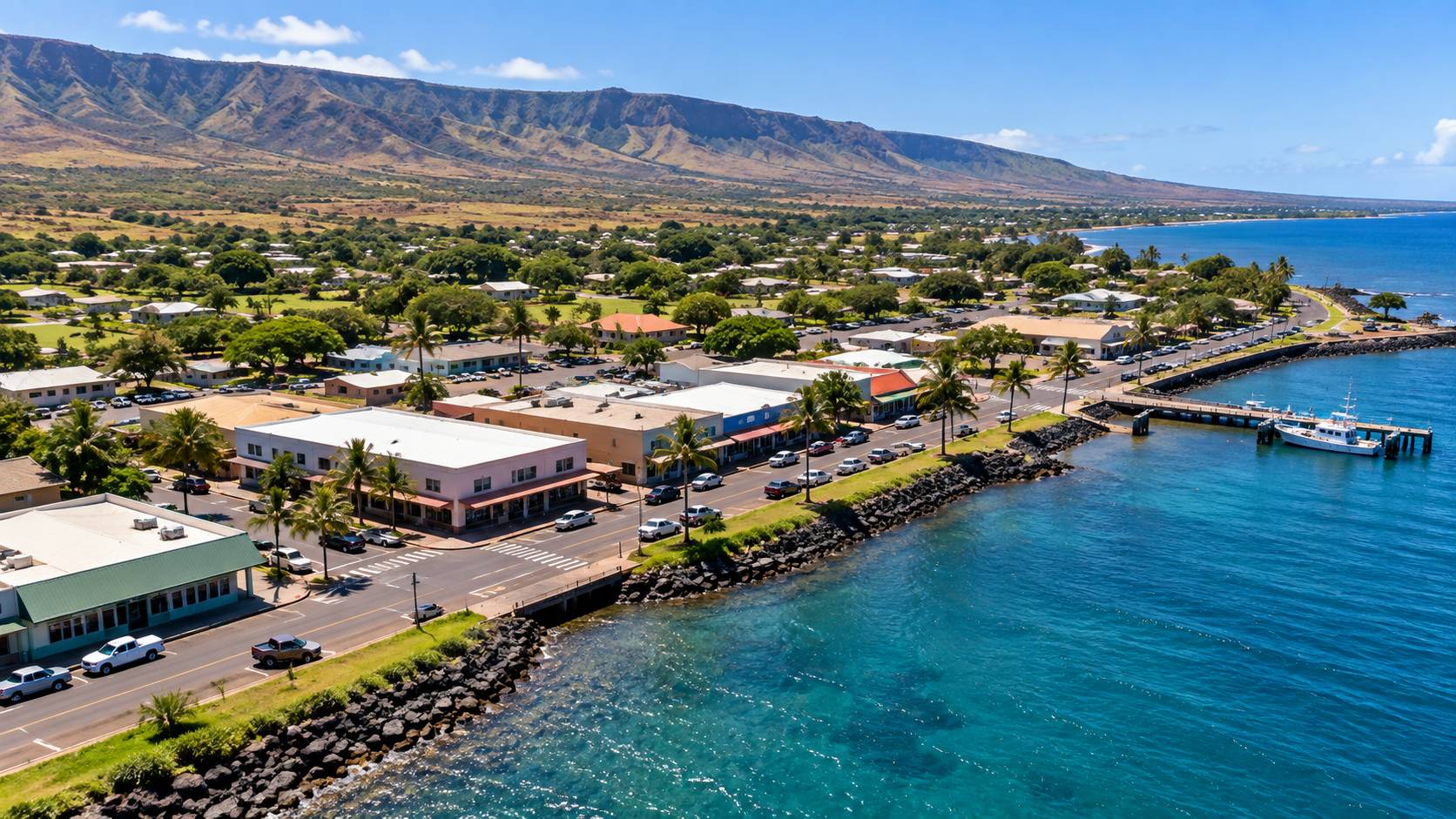
Commercial inventory concentrates in three main zones: the Kaunakakai corridor (the island’s primary business district), scattered highway parcels along Kamehameha V Highway, and the underdeveloped West End near the former Kaluakoi Resort. Most available properties are retail or mixed-use buildings in Kaunakakai, vacant commercial land with highway frontage, or agricultural parcels that may support commercial use under M-1 or M-2 zoning.
Price per square foot for retail and mixed-use space typically ranges from $150 to $275. That is roughly half the level seen in Hilo and about one-third of Kahului on Maui, based on available market data. Lower entry costs come with trade-offs. Properties often remain on the market 240 to 450 days or longer, and cap rates commonly sit in the 8–10% range to reflect limited exit liquidity.
Price Disclaimer: All pricing figures, price-per-square-foot ranges, cap rates, and related market data in this article are approximate estimates drawn from publicly available information at the time of writing. Actual sale prices vary by property condition, location, zoning, and current market conditions. Buyers should independently verify all figures and conduct thorough due diligence.
The population declined 2.8% between 2010 and 2020 according to the U.S. Census Bureau data. Median household income is $52,188, well below the state median of $88,005. Annual visitor arrivals run in the range of tens of thousands, a fraction of Maui’s volume. The resulting visitor-to-resident ratio is far lower than on more tourism-dependent islands, so commercial tenants rely primarily on local spending. Successful businesses here typically serve daily needs such as pharmacies, hardware, and food services rather than luxury retail or high-end hospitality.
Hawai‘i Modern Realty serves clients across all Hawaiian islands. That statewide perspective helps place Moloka‘i opportunities in context against options on O‘ahu, Maui, and Hawai‘i Island. Moloka‘i tends to suit owner-operators who will be present, niche businesses aligned with community needs, or patient investors comfortable with longer hold periods and hands-on management.
Investment Realities: Population, Infrastructure, and Community Input
Unemployment on Moloka‘i has historically run higher than the state average, which can affect tenant quality and rent collection reliability. Seasonal tourism provides modest lift for accommodations and food service in winter months, yet cash flow is less consistent than in high-volume visitor markets.
Infrastructure lags other islands. Internet connectivity is slower and less reliable, which complicates businesses that depend on cloud systems or e-commerce. Most goods arrive by barge from O‘ahu, adding shipping cost and delay. Water availability is a recurring concern; Hawaiian Homelands holds allocation priority, and new commercial projects may face restrictions or expensive upgrades.
Community input carries real weight. Projects that demonstrate local ownership or partnership, employ residents, and respect the island’s rural character are more likely to gain support. Large-scale or culturally insensitive proposals from off-island investors have faced organized opposition and permitting delays even when zoning compliance appears clear.
Underwrite conservatively. Plan for longer lease-up periods, higher vacancy reserves, and greater tenant credit risk. Budget time and cost for community engagement. If a pro forma relies on aggressive rent growth or a short exit timeline, Moloka‘i is unlikely to fit.
Factor | Moloka‘i Typical Range | Comparison Context |
|---|---|---|
Price per sq ft (retail/mixed-use) | 275 | Roughly half of Hilo; one-third of Kahului |
Days on market | 240–450+ | Longer than Maui averages |
Cap rates | 8–10% | Reflects limited liquidity |
Down payment (conventional) | 30–40% | Higher than O‘ahu or Maui norms |
Transaction volume | 3–8 commercial deals per year | Very low liquidity |
Zoning, Permitting, and the Special Management Area Process
Moloka‘i falls under Maui County jurisdiction. Commercial zoning follows Maui County Code Title 19. Key districts include B-1 (Neighborhood Business), B-2 (Community Business), B-3 (Central Business, primarily Kaunakakai), M-1 (Light Industrial), and M-2 (Heavy Industrial). Minimum lot sizes start at 6,000 square feet for B-1 and rise to 7,500 square feet for B-2.
Coastal properties trigger Special Management Area (SMA) requirements. SMA Minor permits generally take 2–4 months. SMA Major permits require public hearings and can stretch 6–12 months. Building permits for new construction often run 6–12 months; change-of-use permits add another 2–4 months. The Moloka‘i Planning Commission meets monthly rather than weekly, which extends timelines by default.
Conditional use permits, common when a property does not fit neatly into existing zoning, require public hearings where community testimony carries significant weight. Plan for a minimum of 6–9 months and budget for counsel experienced in Maui County land use. Local representation helps navigate both formal requirements and unwritten expectations around community engagement. The Maui County Planning Department provides application checklists that serve as a useful starting point.
Financing: Higher Equity Requirements and Fewer Active Lenders
Mainland banks rarely finance Moloka‘i commercial properties. Loan sizes often fall under $1 million, below many portfolio minimums, and limited comparable sales complicate appraisals. Lenders active in this market include Bank of Hawaii, American Savings Bank, Central Pacific Bank, and Hawaii Community Lending, a community development financial institution that serves rural borrowers.
Expect down payments of 30–40%, higher than the 20–25% more common on O‘ahu or Maui. Interest rates typically run at Prime plus 2–3 points, and loan-to-value ratios often cap at 60–70%. Amortization periods are shorter (15–20 years), which increases monthly payments and tightens debt-service coverage.
The SBA 504 program can improve terms for owner-occupied properties (51% or greater occupancy by the buyer’s business). A typical structure is 10% down, 50% conventional first mortgage, and 40% SBA-backed second mortgage at fixed rates. Hawaii Community Lending serves as a local Certified Development Company for these loans.
Cash buyers hold clear leverage. A substantial share of Moloka‘i commercial transactions close all-cash, and sellers often accept discounts to avoid financing contingencies and appraisal risk. When modeling returns across islands, factor in Moloka‘i’s higher equity requirement and shorter amortization.
For a quick estimate of monthly payments under different down-payment and rate scenarios, use the mortgage payment calculator on the Hawai‘i Modern Realty website.
Due Diligence Priorities Specific to Moloka‘i
Environmental assessments deserve extra attention because many commercial parcels have agricultural history. Soil contamination from past pesticide use, cesspools rather than sewer connections, and septic system issues appear frequently. Budget 8,000 for a Phase I environmental assessment on any property with prior agricultural or industrial use.
Title and easement complications surface often. Access easements may be informal or disputed, especially on older parcels. Water rights can be ambiguous, and some properties rely on catchment systems. Engage a title company experienced in rural Hawai‘i transactions and allow extra time for curative work.
Utility verification is essential. Confirm electrical capacity if the intended use involves significant equipment; upgrades are costly and slow. Check water meter availability through the county—new meters can involve long waitlists. Properties still using cesspools face eventual conversion requirements under state law, with conversion costs potentially reaching 50,000 or more.
For income-producing properties, review leases carefully. Below-market rents are common because tenant options are limited and landlords often prioritize occupancy. Verify tenant financials where possible and inspect for deferred maintenance, termite damage, and roof condition. Salt air accelerates deterioration, and qualified contractors are limited and expensive.
Why Local Representation Changes Outcomes
Moloka‘i’s commercial market is relationship-based and relatively informal. Not every available property appears on the MLS; some owners prefer quiet, word-of-mouth conversations. An advisor with long-standing island relationships can identify properties that may come available before formal listing, gauge which sellers will negotiate, and surface community concerns early.
Off-island buyers particularly benefit from local coordination of inspections (service providers are often booked weeks out), navigation of county permitting, and accurate reading of community sentiment. Hawai‘i Modern Realty is a locally owned brokerage with more than a decade of experience, over $2.7 billion in closed sales, more than 3,000 families served, and a roster of 160-plus local advisors. The firm combines deep neighborhood knowledge with modern tools, including AI-powered search that lets buyers describe needs in everyday language, and personalized guidance across all Hawaiian islands.
That combination of local relationships and cross-island perspective helps clients evaluate whether Moloka‘i is the right fit compared with opportunities elsewhere. Transaction timelines typically run longer than on O‘ahu—240-plus days on market is common, and closings can stretch 90–120 days once under contract. Setting realistic expectations from the start protects both time and capital.
Areas We Serve and Property Expertise
Hawai‘i Modern Realty works across the islands with particular strength on O‘ahu and growing statewide reach. Advisors regularly assist clients with:
Condominiums and high-rise residences in urban centers
Luxury single-family homes and oceanfront properties
Multi-family and investment properties
Resort and second-home communities
Long-term and short-term rental properties where legally permitted
Open houses and off-market opportunities
First-time island buyers and experienced mainland investors
Commercial and mixed-use opportunities on Moloka‘i and neighboring islands, including Kaunakakai and other communities listed in our Areas & Lifestyle section
Explore current inventory and neighborhood insights through the firm’s property search and community pages.
Making the Moloka‘i Decision
Moloka‘i commercial real estate rewards patient, community-aligned buyers who plan to hold long-term and operate with a hands-on approach. The lower entry price reflects real constraints: small population, limited infrastructure, longer transaction timelines, and meaningful community oversight. Investors who succeed here typically operate the business themselves, partner with local residents, or accept returns that prioritize lifestyle and community connection over rapid appreciation or easy exit.
When comparing Moloka‘i with markets on Hawai‘i Island or Maui, the trade-off is clear: lower cost and less competition versus lower liquidity and higher operational complexity. For the right buyer that balance is an advantage. For investors focused primarily on cash flow velocity, appreciation, or exit flexibility, other islands often make more sense.
Hawai‘i Modern Realty advisors can walk you through current Moloka‘i inventory, realistic pricing, and how those opportunities compare with options across the Hawaiian Islands. The firm’s local roots and modern tools help clients make decisions grounded in both data and on-the-ground reality.
Frequently Asked Questions
Is Moloka‘i a good market for first-time commercial investors?
It can be for patient owner-operators who understand the longer timelines and community dynamics. It is less suitable for investors seeking rapid turnover or passive high-volume income.
How long does the typical commercial transaction take on Moloka‘i?
Properties often sit 240–450 days or more. Once under contract, closings frequently require 90–120 days due to financing, inspections, and permitting.
Do I need local representation if I already work with a mainland advisor?
Yes. Local knowledge of off-market opportunities, permitting realities, and community expectations materially improves outcomes and reduces risk.
What financing options are realistic?
Higher down payments (30–40%) are common. SBA 504 can improve terms for owner-occupied properties. Cash offers carry significant negotiating power.
Where can I start researching current opportunities?
Begin with Hawai‘i Modern Realty’s statewide search tools and connect with an advisor for inventory that may not appear publicly.
Soft Call to Action
If you are weighing a commercial purchase on Moloka‘i or comparing it with opportunities on other islands, reach out to a Hawai‘i Modern Realty advisor. The team is ready to discuss current inventory, realistic underwriting assumptions, and whether this market fits your goals. modernhawaii.com or contact an advisor through our agent directory to start the conversation.