Table of Contents
Why Are Homes in Hilo More Affordable Than in Other Parts of Hawaiʻi?
Lava Zones, Flood Risk, and Insurance: What Buyers Must Check
Check Water, Wastewater, and Road Access Before Making an Offer
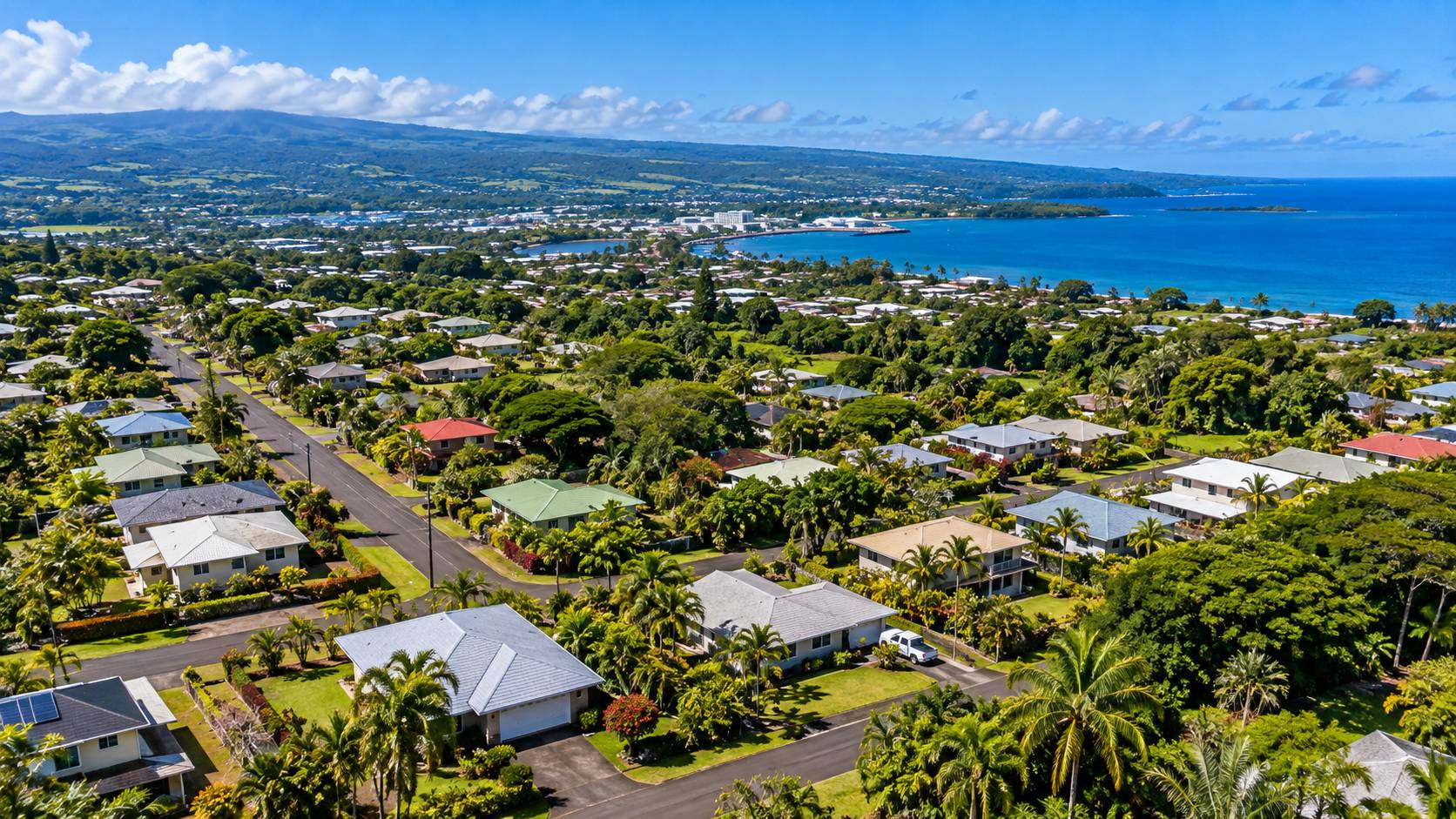
Finding affordable homes in Hilo, Hawaiʻi, can open opportunities for buyers who want to own property on the Big Island without paying the prices often associated with Hawaiʻi's resort communities.
Hilo and nearby East Hawaiʻi communities offer a mix of smaller single-family homes, condominiums, rural properties, and vacant land. But a lower asking price doesn't always mean a lower cost of ownership.
Rainfall, lava hazards, insurance, wastewater systems, and road access can all affect your budget and financing options.
At Hawaiʻi Modern Realty, we've helped more than 3,000 families navigate Hawaiʻi real estate. We combine local knowledge, modern property-search technology, and personalized guidance to help buyers evaluate their options.
Here's where to begin your Hilo home search and what to investigate before making an offer.
Why Are Homes in Hilo More Affordable Than in Other Parts of Hawaiʻi?
Hilo generally offers a different housing market from the resort-oriented communities along the Kona and Kohala coasts.
While West Hawaiʻi attracts significant vacation-home and luxury property interest, Hilo serves as an important residential, commercial, educational, and healthcare center.
Its wetter climate and different mix of properties also influence buyer preferences.
However, not every Hilo property is inexpensive. Home prices vary considerably by neighborhood, condition, size, and property type.
What should buyers compare?
Instead of relying on Hawaiʻi Island's overall median price, examine:
Recent closed sales: What comparable homes actually sold for.
Active inventory: Which properties are available within your budget.
Days on market: How long similar homes have been listed.
Property condition: Whether repairs could change the total purchase cost.
Location: Access to employment, schools, healthcare, and daily services.
Island-wide housing statistics provide context, but they cannot replace a neighborhood-specific comparison.
Start with our Hilo homes for sale page to explore available properties, then compare listings with similar homes.
Where to Find More Affordable Homes Near Hilo
Your ideal location depends on more than price. Consider your daily routine, commute, preferred surroundings, and tolerance for rural infrastructure.
Here's how several East and South Hawaiʻi communities compare.
Area | What buyers may find | Important considerations |
|---|---|---|
Hilo | Established neighborhoods, condos, and single-family homes | Property condition, rainfall, and neighborhood-specific costs |
Keaʻau | Residential subdivisions and larger lots | Road maintenance, utilities, and commute |
Pāhoa | Rural homes and properties at varied price points | Lava hazards, insurance, and infrastructure |
Mountain View | Wooded residential properties and rural lots | Moisture, water systems, and internet access |
Volcano | Homes in a cooler, forested setting | Volcanic hazards, weather, and property maintenance |
Ocean View and Kaʻū | Rural homes and relatively inexpensive land opportunities | Longer distances, utilities, and access to services |
Hilo: Convenience and established neighborhoods
Hilo may be a practical starting point for buyers who want access to grocery stores, healthcare, schools, and employment.
The city is home to the University of Hawaiʻi at Hilo and Hilo Benioff Medical Center.
Properties range from smaller older homes to larger residences, so compare condition and location carefully.
Keaʻau and Pāhoa: More rural housing options
Keaʻau and Pāhoa attract buyers exploring residential subdivisions and properties outside Hilo's urban core.
Some listings may have lower asking prices, but road conditions, water systems, insurance, and property maintenance can affect overall affordability.
Mountain View, Volcano, and Kaʻū: Space with additional responsibilities
These areas may appeal to buyers looking for a quieter setting or more land.
However, distances, climate, and infrastructure differ substantially.
Before choosing a location, verify the specific property's services rather than assuming that every home in the same town has comparable access.
The Real Cost of Buying an Affordable Home in Hilo
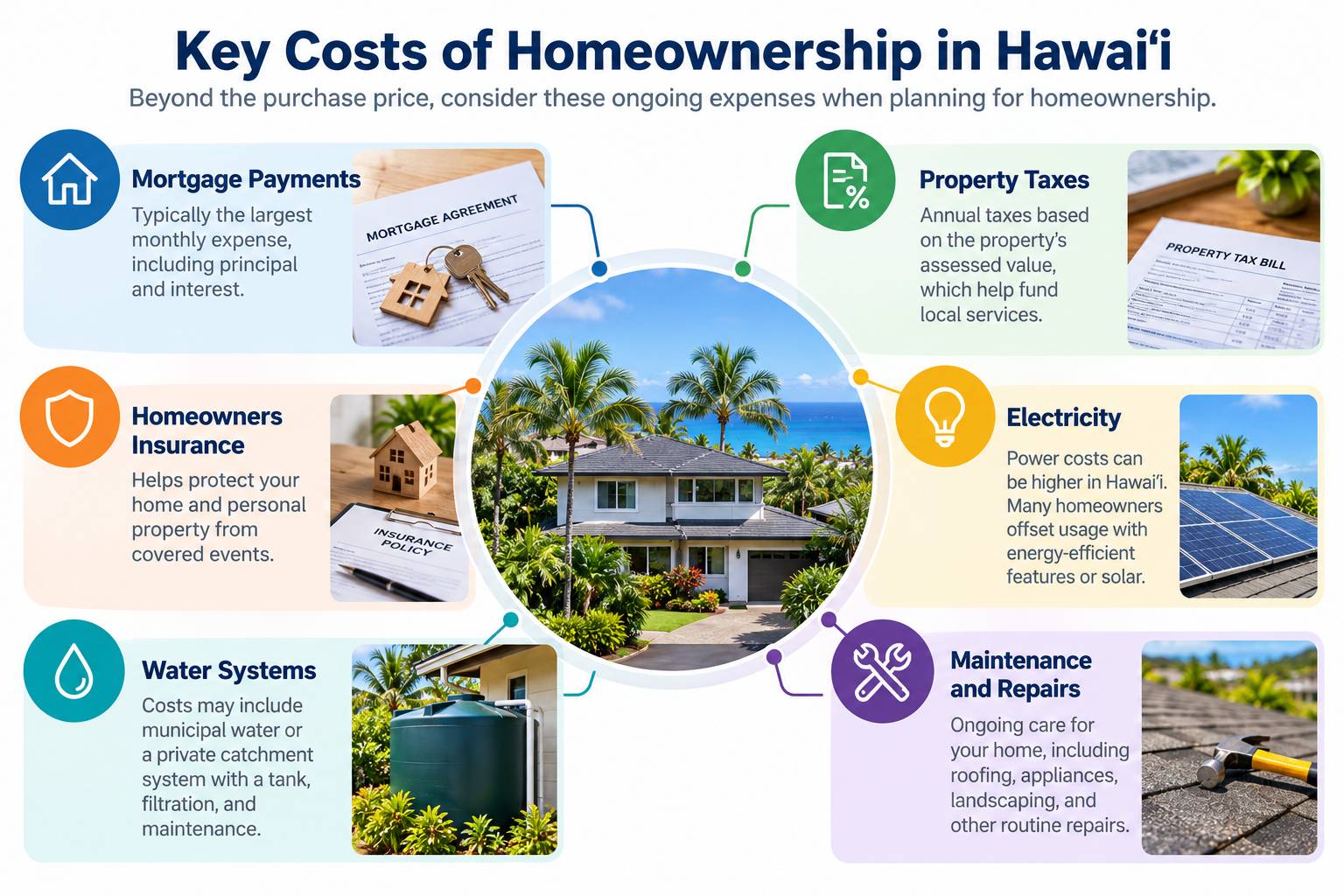
A low listing price can be attractive, but your monthly budget needs to account for more than the mortgage.
Some expenses depend heavily on the property's location and condition.
Property taxes
Hawaiʻi County applies different property tax classifications and rates.
An owner-occupied property may receive different treatment from a second home or investment property, depending on eligibility.
Review the county's current Real Property Tax information and verify the assessment and exemption status of any home you're considering.
Don't assume the seller's current tax bill will be your future tax bill.
Electricity and utilities
Electricity can be a meaningful household expense in Hawaiʻi.
A home's energy efficiency, water heating system, appliances, and solar equipment can influence its operating costs.
Some rural properties also rely on rainwater catchment rather than municipal water.
Ask about the water source, filtration equipment, maintenance requirements, and any inspection or testing records.
Insurance and maintenance
Insurance costs depend on the property's characteristics, location, and available coverage.
In Hilo's wet climate, buyers should pay particular attention to roofing, drainage, moisture damage, and termite conditions.
Obtain property-specific insurance estimates before relying on an advertised purchase price as affordable.
Use our Hawaiʻi mortgage calculator
Our mortgage calculator is the most relevant tool for this guide.
Use it to explore estimated mortgage payments based on purchase price, down payment, interest rate, and loan term.
Then account separately for property taxes, insurance, utilities, maintenance, and any expenses not included in the estimate.
This gives you a more realistic basis for comparing homes.
Lava Zones, Flood Risk, and Insurance: What Buyers Must Check
Hawaiʻi Island has property risks that require careful investigation.
A home's lava hazard classification can influence insurance availability, financing, and long-term ownership decisions.
Understand Hawaiʻi Island's lava hazard zones
The U.S. Geological Survey identifies nine lava-flow hazard zones.
Zone 1 represents the highest relative lava-flow hazard, while Zone 9 represents the lowest.
These classifications reflect geological conditions and past volcanic activity. They do not predict exactly when or where an eruption will occur.
Some areas of Puna fall within higher-hazard zones, but classifications vary by location.
Use the USGS lava-flow hazard resources when evaluating a property.
Don't overlook flood exposure
Heavy rainfall and local drainage conditions also matter.
Check the property's flood designation through the FEMA Flood Map Service Center.
Flood insurance may be required by a lender for certain properties, and standard homeowners policies generally do not cover flood damage.
Get insurance information early
Don't assume that a property is insurable under your preferred policy simply because it has been insured before.
Ask insurance professionals about coverage availability, exclusions, deductibles, and any special requirements.
Resolve major insurance questions before your contractual deadlines.
Check Water, Wastewater, and Road Access Before Making an Offer
Some of the most important expenses associated with rural Hawaiʻi homes are easy to overlook during an initial showing.
Rainwater catchment systems
Some properties use rainwater catchment for household water.
Ask about tank condition, filtration, disinfection, testing, and maintenance.
If financing the purchase, confirm that the water system meets your lender's applicable requirements.
Cesspools and wastewater systems
Older Hawaiʻi homes may use cesspools or other onsite wastewater systems.
Under HRS §342D-72, most cesspools must be upgraded, converted, or connected to an approved sewer system before January 1, 2050, unless an exemption applies. Certain conditions can require earlier action.
The Hawaiʻi Department of Health Wastewater Branch provides information about requirements and available resources.
Before buying, determine which wastewater system serves the property and obtain appropriate inspection and upgrade-cost information.
Private roads and access
A property may have road access without county-maintained roads.
Review recorded access rights, road ownership, maintenance responsibilities, and any association obligations.
For vacant land, verify whether the parcel has legal and practical access before assuming it can be developed.
Financing an Affordable Home in Hilo
Different financing programs may help qualified buyers purchase a home, but eligibility depends on the borrower and property.
VA home loans
Eligible military borrowers and veterans may qualify for VA-backed financing with no down payment, subject to applicable requirements.
The property's condition, water system, access, and appraisal findings can affect eligibility.
Review the VA home loan program and discuss property-specific requirements with a participating lender.
FHA and USDA loans
FHA-insured mortgages may offer lower down payment options for qualifying buyers.
USDA programs may also be relevant to eligible borrowers purchasing properties in qualifying rural areas.
Use the USDA eligibility resources to check whether a particular address may qualify.
First-time buyer assistance
Some buyers may qualify for state or county housing assistance programs.
The Hawaiʻi Housing Finance and Development Corporation is a useful starting point for information about available programs.
Funding, income limits, and eligibility requirements can change, so confirm current availability before building assistance into your budget.
Buying a Hilo Home From the Mainland
You can begin a Hilo home search before moving to Hawaiʻi.
Online listings, virtual tours, and electronic documents can make the process easier, but remote buying still requires careful coordination.
We recommend arranging independent inspections and reviewing property-specific issues before removing applicable contingencies.
For rural properties, that may include additional evaluations of water systems, wastewater facilities, road access, and insurance availability.
Our modern property-search resources help buyers explore listings remotely, while personalized guidance supports the decisions that technology alone cannot make.
Why Work With Hawaiʻi Modern Realty?
Buying an affordable home is about finding a property that fits your budget without overlooking costs that could create problems later.
At Hawaiʻi Modern Realty, we combine local market knowledge, modern technology, and personalized service.
We're a locally owned, independent brokerage with more than a decade of Hawaiʻi real estate experience.
We've helped over 3,000 families and are part of Leading Real Estate Companies of the World®, an international real estate network.
Our approach brings together:
Local market knowledge: We help buyers compare properties and understand relevant Hawaiʻi ownership considerations.
Personalized guidance: We focus on your needs, budget, and long-term goals.
Professional coordination: We help identify questions that should be addressed by lenders, inspectors, insurance professionals, and other specialists.
Our Service Areas and Property Expertise
Our residential real estate services support buyers and sellers throughout Hawaiʻi.
Our offerings include:
Hawaiʻi Island: Hilo, East Hawaiʻi, and other residential markets.
Oʻahu: Condominiums, single-family homes, and luxury properties.
Maui: Residential and luxury real estate.
Kauaʻi: Residential and luxury properties.
Condominiums: Guidance on ownership costs and association considerations.
Rental and investment properties: Buying and selling representation, with applicable restrictions reviewed separately.
Luxury homes: Representation for distinctive residential properties.
Open houses and property showings: Opportunities to evaluate available homes.
Military and family relocation: Assistance for buyers moving to or within Hawaiʻi.
Frequently Asked Questions About Affordable Homes in Hilo
Is Hilo one of the more affordable places to buy in Hawaiʻi?
Hilo and parts of East Hawaiʻi can offer lower-priced properties than many resort-oriented markets. However, affordability depends on property type, condition, financing, and ownership costs.
Where can I find cheaper homes near Hilo?
Buyers often explore Keaʻau, Pāhoa, Mountain View, and other East Hawaiʻi communities. Compare available listings alongside insurance, utilities, access, and maintenance requirements.
Are homes in Puna safe to buy?
Safety and suitability depend on the specific property and its hazards. Review lava zones, flood exposure, building condition, and insurance options before deciding.
Can I buy a Hilo home with a VA loan?
Eligible buyers may be able to use VA financing for qualifying properties. The home must satisfy applicable loan and property requirements.
Is buying vacant land cheaper than buying a house?
Vacant land may have a lower purchase price, but site preparation, utilities, access, permits, and construction can add substantial costs.
How do I start searching for affordable homes in Hilo?
Begin with our Hilo real estate listings, compare properties within your budget, and review financing and ownership costs before scheduling showings.
Ready to Find an Affordable Home in Hilo?
The right Hilo home should fit more than your purchase budget. It should also make sense for your lifestyle, financing, insurance needs, and long-term plans.
At Hawaiʻi Modern Realty, we combine local expertise, modern search tools, and personalized guidance to help you evaluate your options.
Start exploring Hilo homes today, and let us help you understand the details before you make an offer.
Browse Hilo Homes for Sale or Contact Hawaiʻi Modern Realty to discuss your buying goals.