Table of Contents
4. Review Coastal Development Restrictions Before Planning Renovations
Frequently Asked Questions About Buying Oceanfront Property in Hawai‘i
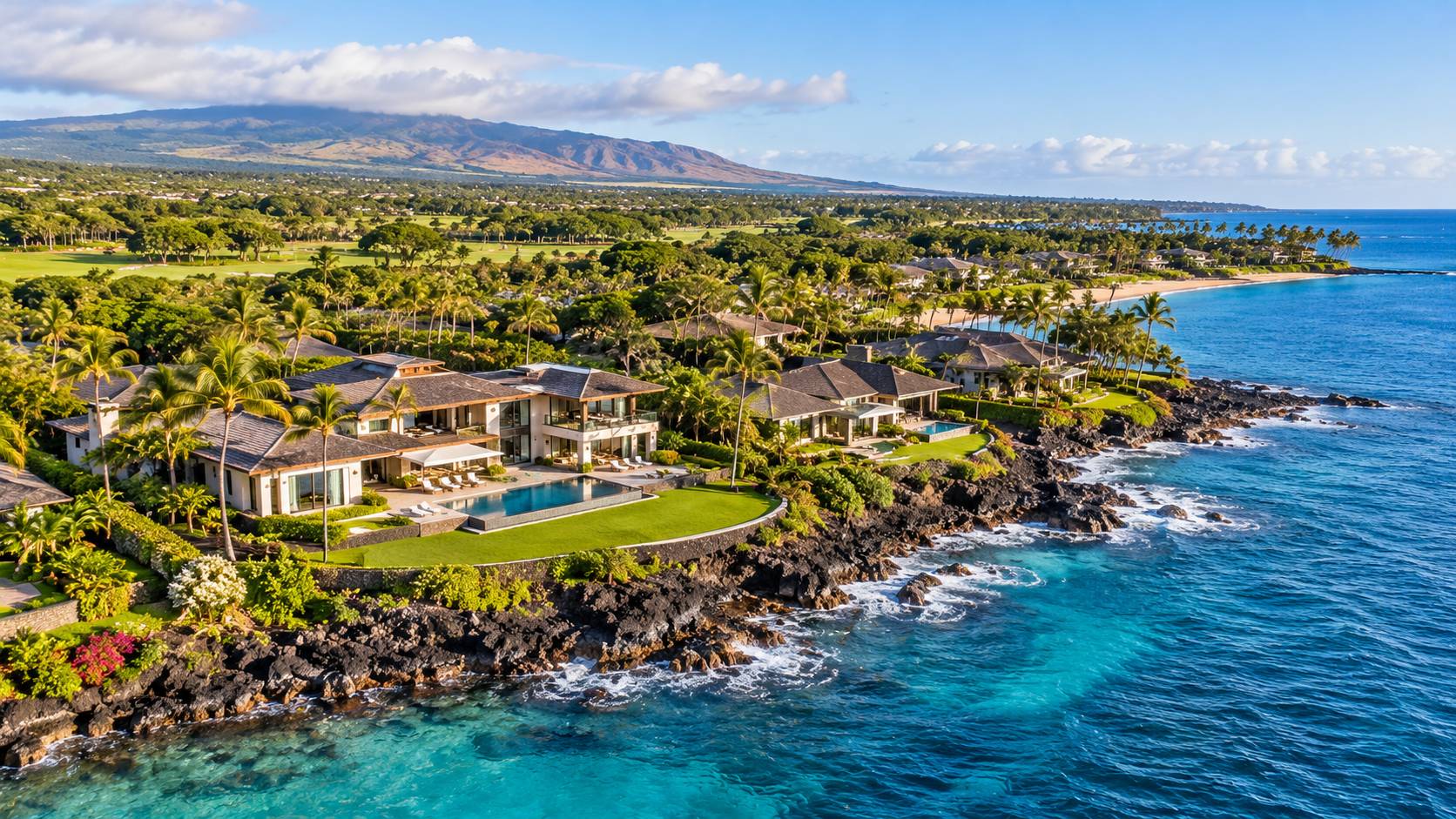
An oceanfront home in Hawai‘i offers something few properties can match: direct proximity to the Pacific, expansive views, and a lifestyle closely connected to the coastline. But buying waterfront property also means evaluating risks and ownership responsibilities that may not apply to inland homes.
Shoreline boundaries, coastal erosion, development restrictions, insurance availability, and maintenance expenses can significantly influence a property's long-term value and usability.
At Hawai‘i Modern Realty, we've helped more than 3,000 families navigate Hawai‘i real estate. Our locally owned brokerage combines island expertise with modern property-search tools to help buyers evaluate homes beyond their listing descriptions.
If you're considering an oceanfront property, here's what to investigate before making an offer.
1. Understand What You're Actually Buying
Not every property advertised as oceanfront offers the same relationship to the water.
A home may sit directly beside a sandy beach, overlook a rocky coastline, or occupy an elevated parcel above the ocean. Each setting creates different considerations for access, erosion exposure, privacy, and maintenance.
Before comparing properties, distinguish between:
Oceanfront: A property adjoining the coastline, although the exact legal boundaries and access rights require verification.
Ocean-view: A property with ocean views that may be separated from the shoreline by other parcels or public land.
Beachfront: A property immediately adjoining a beach, subject to applicable property boundaries and public access rights.
Waterfront condominium: A residence within a coastal building where ownership and maintenance responsibilities may differ from those of a detached home.
A property with direct beach frontage may command a premium, but that does not necessarily mean it offers exclusive use of the beach.
In Hawai‘i, shoreline access and ownership boundaries are particularly important. Buyers should not assume that a private residence includes private ownership of the adjacent beach.
2. Verify Shoreline Boundaries and Setback Requirements
One of the most important steps when buying oceanfront real estate is understanding where the legally recognized shoreline lies.
Hawai‘i uses a shoreline certification process to establish a boundary relevant to coastal regulations. The certified shoreline provides a baseline for measuring shoreline setbacks and helps identify jurisdictional boundaries.
The Hawai‘i Department of Land and Natural Resources provides information about the state's shoreline certification process.
Why shoreline setbacks matter
Shoreline setbacks restrict certain construction and development activities near the coast.
These requirements can affect whether you may:
Expand an existing residence
Build an additional structure
Install or replace certain shoreline protection features
Construct a pool or other outdoor improvement
Rebuild after substantial damage
Setback rules vary by county, and approvals may depend on the property's location and proposed work.
A home that was legally constructed years ago may not meet the requirements that would apply to new construction today.
That distinction matters if you're purchasing an older luxury property with plans for a substantial renovation.
What should you request?
Ask for available surveys, shoreline certifications, building permits, and relevant coastal approvals.
If major improvements are part of your plans, consult the appropriate county planning department and qualified professionals before assuming the work will be permitted.
Our role is to help buyers identify the questions that need answers and coordinate appropriate property investigations, not to replace legal or engineering advice.
3. Evaluate Coastal Erosion and Flood Exposure
Oceanfront properties face environmental conditions that can change over time.
Wave activity, coastal erosion, storms, and flooding can affect the land surrounding a home. The degree of exposure varies considerably by shoreline type, elevation, and location.
A rocky coastal parcel may have different concerns from a sandy beachfront property. Neither setting should automatically be considered risk-free.
The state's Coastal Lands Program provides information about shoreline management and coastal conditions.
Check the property's flood zone
Use the FEMA Flood Map Service Center to identify the property's mapped flood hazard designation.
Flood maps are an important starting point, but they do not capture every possible coastal hazard.
For higher-value oceanfront properties, consider consulting qualified engineers or coastal specialists to evaluate the home's location and exposure.
Investigate historical shoreline changes
Ask whether the property has experienced shoreline erosion, flooding, or damage from major wave events.
Look for evidence of past repairs, shoreline protection structures, and any related permits.
A property may have exceptional ocean views while carrying substantial future maintenance or development limitations.
4. Review Coastal Development Restrictions Before Planning Renovations
Buying an existing oceanfront home does not automatically mean you can modify it however you choose.
Certain coastal properties fall within a Special Management Area, commonly called an SMA.
Hawai‘i's Coastal Zone Management Program explains that development within designated SMAs may require county approval before other development permits can be issued.
The requirements depend on the location and nature of the proposed work.
For example, adding a guest structure, significantly expanding the home, or modifying land near the shoreline may involve additional review.
County rules are not identical
County | What buyers should investigate |
|---|---|
Honolulu / O‘ahu | Shoreline setbacks, SMA requirements, and permits for existing improvements |
Maui County | Shoreline setback determinations, coastal development approvals, and renovation restrictions |
Kaua‘i County | Current shoreline setback rules and applicable SMA regulations |
Hawai‘i County | Shoreline setbacks, SMA permits, and site-specific development conditions |
Maui County provides separate processes for shoreline setback determinations and variances. Kaua‘i County also maintains its own shoreline and SMA regulations, including updated rules published in 2026.
Before buying a property with redevelopment potential, confirm what can actually be built.
A large parcel does not necessarily provide unrestricted building opportunities.
5. Understand Insurance Before Committing to the Purchase
Insurance is a major consideration for Hawai‘i oceanfront homeowners.
Coverage availability and premiums can depend on the home's construction, location, condition, and exposure to coastal hazards.
Buyers should investigate:
Homeowners insurance availability and coverage limits
Hurricane coverage and applicable deductibles
Flood insurance requirements and options
Exclusions relating to coastal or water damage
Replacement-cost estimates for specialized construction
Some policies may exclude damage associated with flooding or gradual erosion.
For luxury homes, replacement costs can also differ significantly from market value. Custom finishes, specialized materials, and architectural features may increase rebuilding expenses.
Request property-specific insurance quotes before removing relevant purchase contingencies.
An estimate based on another property may not accurately reflect the cost of insuring the home you're considering.
6. Account for the Maintenance Demands of Coastal Living
Oceanfront homes often require more attention to exterior materials and building systems because of exposure to salt air, moisture, wind, and intense sunlight.
Common maintenance concerns include corrosion, deterioration of metal fixtures, weathering of exterior finishes, and damage to exposed equipment.
During inspections, pay particular attention to:
Roofing and exterior waterproofing
Window and door seals
Exterior metal components
Air-conditioning equipment
Decks, railings, and outdoor structures
Drainage and moisture intrusion
A property that appears beautifully maintained may still require substantial future work.
Consider hiring inspectors familiar with coastal construction and obtaining estimates from qualified contractors for any identified concerns.
For high-value properties, a standard home inspection may need to be supplemented with specialized evaluations.
7. Compare Oceanfront Locations Across Hawai‘i
The experience of owning oceanfront real estate differs considerably across the islands.
A property on O‘ahu may offer proximity to Honolulu's employment centers and amenities, while a home in a resort community on Maui or Hawai‘i Island may emphasize privacy and recreational access.
Location also influences maintenance logistics, available contractors, and ownership expenses.
Some of the luxury markets buyers may explore include:
O‘ahu: Kahala, Diamond Head, Kailua, and other established coastal communities.
Maui: Wailea, Mākena, and Kā‘anapali.
Kaua‘i: Po‘ipū and other coastal residential or resort areas.
Hawai‘i Island: Kohala Coast communities and the Kailua-Kona area.
These locations contain different combinations of oceanfront residences, ocean-view properties, condominiums, and resort homes.
A neighborhood's reputation alone should not determine your choice. Compare individual properties based on their physical setting, ownership structure, and intended use.
8. Calculate the Full Cost of Ownership
The purchase price is only one part of the financial commitment involved in owning a luxury oceanfront home.
Your budget should account for ongoing expenses and potential major repairs.
Expense | Why it matters |
|---|---|
Property taxes | County classifications and assessments affect annual costs |
Insurance | Coastal exposure and replacement costs can influence premiums |
Maintenance | Salt air and weather exposure may increase upkeep |
Association fees | Applicable to certain condominiums and planned communities |
Capital improvements | Roofing, exterior repairs, and building systems can require substantial spending |
Financing | Interest rates and down payments affect monthly carrying costs |
If you're financing the purchase, our mortgage calculator can help you estimate principal and interest payments under different assumptions.
For a more complete financial picture, combine those estimates with current insurance quotes, property tax information, and maintenance projections.
Buyers considering future resale should also evaluate how coastal risks or development restrictions could influence another purchaser's decision.
9. Complete These Checks Before Making an Offer
Oceanfront properties deserve a property-specific due diligence plan.
We recommend organizing your evaluation around the following questions:
Ownership: Are the property's boundaries, title conditions, and access rights clearly documented?
Shoreline: Is there a relevant shoreline certification or survey?
Permits: Were existing improvements properly permitted, and are there outstanding issues?
Coastal exposure: What do available flood and erosion information reveal?
Insurance: Can you obtain appropriate coverage at a manageable cost?
Condition: What specialized inspections or engineering evaluations are necessary?
Future plans: Can the property legally accommodate your intended renovations or use?
Financial fit: Does the full ownership cost align with your budget?
The answers may affect your offer terms, inspection strategy, or decision to proceed.
How We Help Luxury Buyers Navigate Hawai‘i's Coastal Market
At Hawai‘i Modern Realty, we understand that purchasing a luxury property involves more than evaluating finishes, square footage, and views.
Our locally owned, independent brokerage combines Hawai‘i market knowledge with modern technology and personalized guidance.
As a member of Leading Real Estate Companies of the World®, we also have access to an international real estate network.
We help buyers understand local property options, evaluate comparable listings, and identify important questions before moving forward.
For oceanfront purchases, that means taking the property's location and ownership considerations seriously while working with the appropriate inspection, legal, and insurance professionals.
Our goal is to help you find a home that fits both your lifestyle and your long-term ownership priorities.
Frequently Asked Questions About Buying Oceanfront Property in Hawai‘i
Can you own a private beach in Hawai‘i?
Hawai‘i recognizes public rights along its shorelines. Owning an oceanfront parcel does not automatically grant exclusive ownership or use of the adjacent beach. Property boundaries and access rights should be reviewed individually.
Can you build a seawall on oceanfront property?
Not automatically. Shoreline protection structures are subject to coastal regulations and may require special approvals. Some proposals may be restricted or prohibited depending on the circumstances.
Is oceanfront property more expensive to insure?
It can be. Insurance costs depend on the property's location, construction, replacement value, and exposure to hazards. Buyers should obtain actual quotes rather than assume all waterfront homes carry similar premiums.
Can you renovate an older oceanfront home?
Potentially, but renovations may be affected by shoreline setbacks, SMA requirements, building codes, and the property's existing permit history. Confirm the requirements before committing to an extensive renovation plan.
Is buying oceanfront real estate in Hawai‘i a good investment?
It depends on the purchase price, property condition, ownership costs, intended use, and future market conditions. Oceanfront locations may be desirable, but appreciation is not guaranteed, and coastal risks can affect long-term value.
Find an Oceanfront Home That Fits Your Goals
Buying an oceanfront home in Hawai‘i should begin with understanding the property, not simply admiring the view.
Shoreline restrictions, insurance, maintenance, and long-term ownership costs all deserve careful consideration.
Our team can help you explore luxury homes across Hawai‘i, compare local markets, and approach your purchase with the information needed to make a confident decision.
Ready to explore Hawai‘i oceanfront real estate?
Contact Hawai‘i Modern Realty at 808-320-1244 or aloha@modernhawaii.com to discuss your property search.