Table of Contents
1. Limited Developable Land Keeps Housing Supply Constrained
6. Fee Simple and Leasehold Ownership Affect Property Prices
8. Mortgage Rates Make Expensive Homes Even Harder to Afford
9. How to Buy a Home in Hawai‘i Without Overextending Your Budget
Hawai‘i real estate is expensive because the demand for homes competes with a limited supply of land suitable for development, high construction costs, and a housing market shaped by local residents, military households, and buyers relocating from elsewhere. Geography makes expanding housing supply difficult, while financing costs can make even moderately priced properties challenging to afford.
But Hawai‘i is not one housing market. Prices vary considerably between islands, neighborhoods, and property types. Understanding those differences can help you make a more informed buying decision.
At Hawai‘i Modern Realty, we've helped more than 3,000 families navigate island real estate. Here's what drives Hawai‘i home prices and how to approach your search with a realistic budget.
1. Limited Developable Land Keeps Housing Supply Constrained
Hawai‘i's geography is one of the biggest reasons homes are expensive. Although the islands contain substantial land, much of it is unsuitable for conventional residential development or subject to land-use restrictions.
The state's land-use system divides land into four districts:
Urban: Areas generally intended for residential, commercial, and other urban development.
Agricultural: Land primarily designated for agricultural uses, with restrictions on residential development.
Conservation: Land managed under conservation regulations, including environmentally sensitive areas.
Rural: Areas allowing certain low-density uses under applicable rules.
According to the Hawai‘i Office of Planning and Sustainable Development, approximately 5% of the state's land is designated Urban, while about 48% is Conservation and 47% is Agricultural. Less than 0.5% is Rural.
These figures describe state land-use classifications, not the exact percentage of land where housing could legally or physically be built.
Even within Urban districts, steep terrain, infrastructure capacity, flood exposure, and local zoning can limit development.
Why can't Hawai‘i simply build more homes?
Building additional housing may require land-use approvals, county permits, infrastructure improvements, and financing. These requirements can increase development costs and extend project timelines.
On O‘ahu, where residential demand is concentrated around Honolulu and established communities, finding suitable land for new housing can be especially difficult.
Limited supply does not mean prices can never decline. It means increasing the number of available homes can be more challenging than in mainland markets with greater opportunities for outward expansion.
2. Construction Costs Make New Homes Expensive
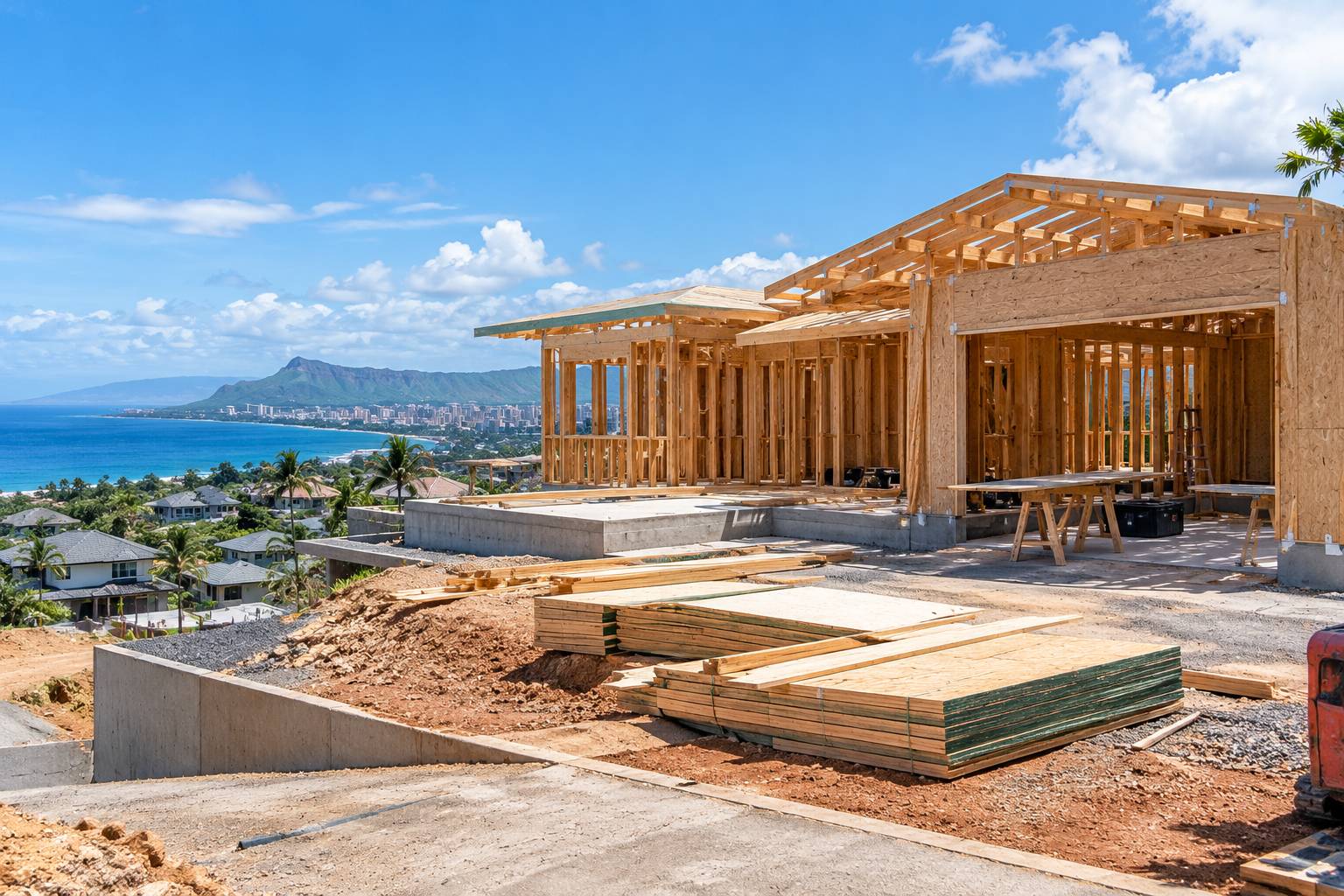
Building a home in Hawai‘i involves expenses that mainland buyers may not encounter to the same degree.
Many construction materials must be shipped to the islands, and specialized equipment or components may require additional transportation. Labor availability and site conditions can also affect project budgets.
Several factors contribute to the cost of building:
Materials and shipping: Lumber, fixtures, and building systems may carry additional transportation costs.
Labor: Skilled contractor availability and project complexity influence construction pricing.
Permitting: Required approvals and revisions can increase the time and expense involved in development.
Site preparation: Sloped properties, drainage requirements, and utility connections can make otherwise attractive land expensive to develop.
These costs affect more than new construction. They also influence the economics of renovating older homes and replacing aging housing stock.
For buyers considering vacant land, the purchase price is only the beginning. Our guidance on property evaluation emphasizes checking development feasibility before assuming a lot can accommodate the home you want.
3. Buyer Demand Supports High Prices in Desirable Areas
Hawai‘i attracts different types of homebuyers, including local households, military families, people relocating for work, second-home buyers, and luxury purchasers.
These groups do not compete equally in every market.
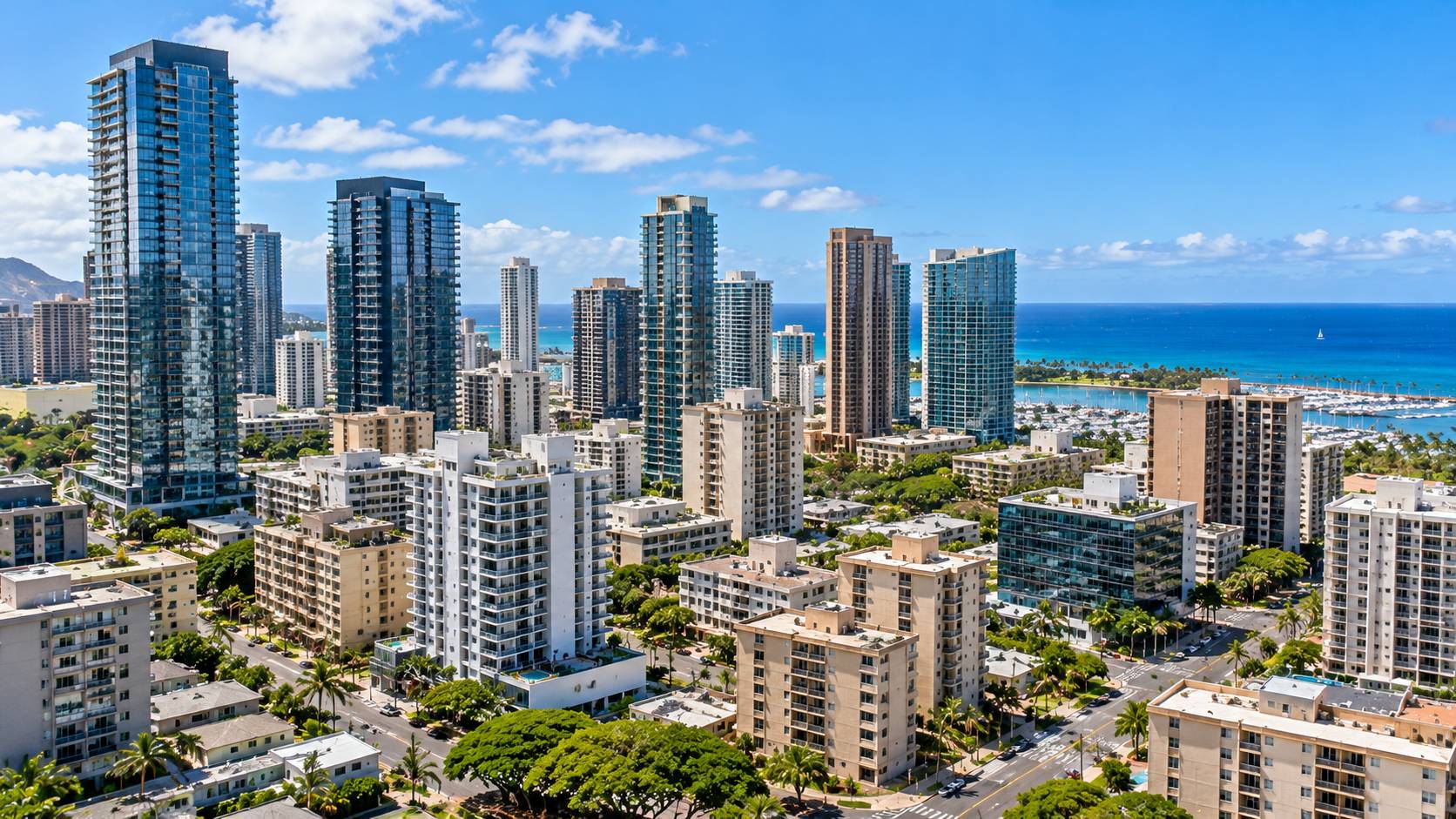
For example, buyers seeking primary residences in Kapolei may have different priorities from purchasers looking for luxury oceanfront property in Kahala. Likewise, the market for an older Honolulu condominium can behave differently from the market for a detached home in Kailua.
Buyers relocating from higher-equity markets may also have purchasing power that differs from that of local households relying primarily on wages and savings.
However, it would be misleading to attribute Hawai‘i's housing costs entirely to outside buyers. Local housing needs, development constraints, borrowing costs, and the available mix of properties all matter.
What do current O‘ahu prices show?
The September 2026 report from the Honolulu Board of REALTORS® illustrates how different property segments can move in opposite directions.
O‘ahu resale market | September 2026 median | Year-over-year change |
|---|---|---|
Single-family homes | $1,110,000 | -3.9% |
Condominiums | $523,000 | +2.8% |
The same report recorded 293 single-family sales and 375 condominium sales.
These numbers show why statewide price headlines are not enough. A buyer shopping for a condo should not evaluate the market using single-family home prices alone.
You can follow updated figures through the Honolulu Board of REALTORS® market reports and Hawai‘i REALTORS® statewide housing trends.
4. Housing Inventory Varies by Property Type
Limited housing inventory can intensify competition when multiple buyers want similar properties.
But not every segment of Hawai‘i's market has the same supply conditions.
On O‘ahu, September 2026 figures showed single-family homes spending a median of 16 days on the market, compared with 41 days for condominiums. The report also showed that condo inventory had increased from the previous year while single-family inventory remained relatively stable.
For buyers, this distinction matters.
A detached home in a highly sought-after neighborhood may attract competition even when condominium buyers have more properties to compare.
Conversely, a condo with high maintenance fees or financing concerns may remain available longer than a similarly priced unit in a financially healthier building.
Rather than asking whether Hawai‘i is a buyer's or seller's market, ask what conditions apply to the specific property type and neighborhood you're considering.
5. Condos Can Be Less Expensive to Buy but Costly to Own
Condominiums often provide a lower purchase-price entry point than detached homes, especially in urban areas.
However, a lower listing price does not automatically mean lower monthly ownership costs.
In addition to the mortgage, buyers may need to budget for:
Monthly maintenance or association fees
Property taxes
Insurance expenses
Building reserves and special assessments
Utilities and other ownership costs
Some Hawai‘i condominium buildings face additional challenges involving insurance coverage, deferred maintenance, and reserve funding. These issues can affect both monthly expenses and financing eligibility.
Before purchasing, review the association's financial statements, reserve information, governing documents, and available disclosures with the appropriate professionals.
A property that appears affordable based on its asking price may be less attractive once its full carrying costs are considered.
6. Fee Simple and Leasehold Ownership Affect Property Prices
Another reason Hawai‘i real estate prices vary is the distinction between fee simple and leasehold ownership.
Fee simple ownership generally includes ownership of the land and improvements, subject to applicable restrictions.
Leasehold ownership provides an interest in property under a land lease for a specified period.
Leasehold properties may have lower purchase prices than comparable fee simple properties, but buyers must evaluate additional obligations and risks.
Important considerations include the remaining lease term, lease rent, potential rent adjustments, financing availability, and what happens when the lease expires.
A lower asking price may reflect these limitations rather than an unusually good deal.
For anyone considering leasehold property, we recommend reviewing the lease documents with a qualified Hawai‘i real estate attorney and confirming financing eligibility before committing to a purchase.
7. Location Makes a Major Difference Across the Islands
Hawai‘i's islands have distinct real estate markets. Even within the same island, property values can change significantly between communities.
For example, oceanfront homes and resort-area properties may command substantial premiums, while some inland neighborhoods offer more attainable options.
Here are some of the areas and property types relevant to our buyer and seller guidance:
O‘ahu: Honolulu, Kaka‘ako, Kahala, Kailua, Kapolei, Mililani, and surrounding communities.
Maui: Residential homes, condominiums, and luxury properties in established markets.
Kaua‘i: Residential and resort-area properties, including communities around Kōloa and Po‘ipū.
Hawai‘i Island: Residential properties, vacant land, and luxury homes in markets with different development conditions.
Our property expertise includes single-family homes, condominiums, luxury residences, relocation purchases, and residential sales.
Comparing islands can reveal different opportunities, but affordability should never be judged by price alone.
A lower-priced home may involve longer commutes, higher insurance costs, limited infrastructure, or substantial renovation expenses.
The right choice depends on how the property fits your lifestyle and total budget.
8. Mortgage Rates Make Expensive Homes Even Harder to Afford
Purchase prices receive most of the attention, but financing costs can have an equally important effect on affordability.
Consider an illustrative $800,000 home purchased with a 20% down payment.
Illustrative Mortgage Scenario
30-year fixed • Adjust the numbers to see how the payment changes
30-year fixed loan
Excludes taxes, insurance, association fees, and closing costs. Rate is hypothetical, not a lender quote.
A change in interest rates can significantly affect the monthly payment, even when the home's price stays the same.
Use our Hawai‘i mortgage calculator to explore how your loan amount and financing assumptions affect your estimated payment.
For a complete budget, also request estimates for insurance, taxes, association fees, and other property-specific expenses.
9. How to Buy a Home in Hawai‘i Without Overextending Your Budget
High housing costs do not mean every buyer needs the same strategy. The goal is to find a property that fits your financial situation without taking on risks you do not fully understand.
Compare property types before choosing a neighborhood
A condo, townhome, or smaller detached home may offer a different balance of purchase price and ongoing expenses.
Evaluate the complete ownership cost rather than focusing only on the listing price.
Get financing guidance early
Speak with a lender before beginning a serious property search.
Ask about loan eligibility, estimated closing costs, down payment requirements, and programs that may apply to your situation.
Eligible military buyers can also explore VA financing, which may allow a qualifying purchase without a down payment, subject to lender and program requirements.
Understand the property's risks
Before making an offer, investigate relevant property concerns such as flood exposure, insurance availability, association finances, and ownership structure.
For vacant land or properties requiring significant renovation, confirm the intended use is feasible.
Focus on your actual monthly budget
A mortgage preapproval provides useful information, but it should not determine the maximum amount you're comfortable spending.
Account for maintenance, transportation, savings, and unexpected expenses before setting your price range.
Use neighborhood-specific market information
Statewide trends can provide context, but negotiations depend on comparable sales and current competition.
We help buyers evaluate available properties using local market knowledge and information relevant to their individual goals.
Why Work With Hawai‘i Modern Realty?
Buying in an expensive market requires more than finding a property with an attractive listing price.
At Hawai‘i Modern Realty, we combine local market knowledge with modern real estate tools and personalized guidance.
We're a locally owned, independent brokerage and a member of Leading Real Estate Companies of the World®. Our experience serving more than 3,000 families helps inform how we approach buyers' questions about property selection and market conditions.
Whether you're relocating to O‘ahu, purchasing your first condominium, or exploring luxury real estate, we can help you assess options that align with your priorities.
Our goal is to help you understand the market before making a major financial commitment.
Frequently Asked Questions About Hawai‘i Real Estate Prices
Why are houses in Hawai‘i more expensive than on the mainland?
Limited developable land, high construction and transportation costs, and demand for homes all contribute to elevated prices. The extent of the difference depends on which mainland and Hawai‘i markets are being compared.
Which Hawaiian island has the most affordable real estate?
Hawai‘i Island often has lower single-family home prices than O‘ahu, Maui, or Kaua‘i, based on county-level market comparisons. However, prices vary widely by location and property type. Insurance, transportation, and infrastructure costs also matter.
Will Hawai‘i home prices ever go down?
Yes. Home prices can decline, and individual market segments may experience different trends. For example, O‘ahu's single-family median declined year over year in September 2026. Long-term land constraints do not prevent short-term price corrections.
Is buying a condo cheaper than buying a house in Hawai‘i?
Condominiums frequently have lower purchase prices than detached homes, but monthly maintenance fees, insurance, and potential special assessments can increase the total cost of ownership.
Can first-time buyers afford a home in Hawai‘i?
Some can, depending on income, savings, financing, property selection, and available assistance. A lender can help determine eligibility for financing programs, while a local real estate advisor can help identify realistic property options.
Start Your Hawai‘i Home Search With a Clear Plan
Hawai‘i's housing costs reflect long-term land constraints, construction expenses, and demand that varies across islands and property types. Understanding those factors helps you make decisions based on more than the asking price.
If you're considering a purchase, start by estimating your payment with our mortgage calculator.
Then connect with our team to discuss the neighborhoods, properties, and financing considerations that fit your goals.
Ready to explore your options?